
The quick take
Verdict, audience & limits
What Is a Safety Razor and Why Should You Switch?
I still remember the morning I made the switch. I was standing in front of my bathroom mirror, frustrated after yet another cartridge razor had dragged across my face leaving a trail of irritation...
Who this is for
Readers deciding whether this shaving topic, method, or product category fits their routine and preferences.
What this cannot promise
A universal result, irritation-free shave, medical outcome, or firsthand product test unless that specific use is explicitly documented.
Specifications & source boundary
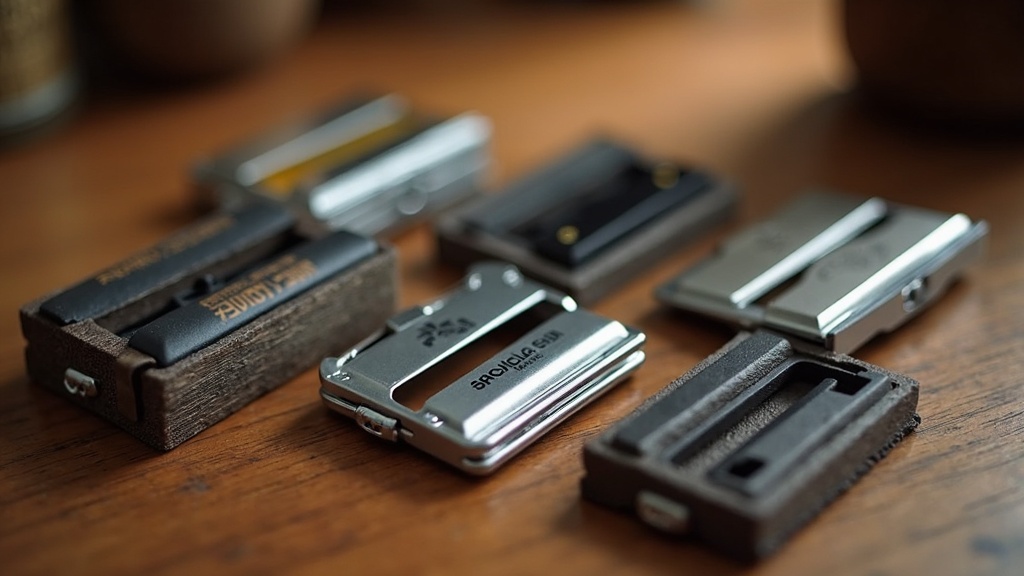
Model dimensions, materials, blade compatibility, and loading instructions should be checked against the maker’s documentation for the exact product and version. Manufacturer specifications are not independent measurements, and a photograph is not evidence of a product test.
How to read the evidence
Applies only where a specific razor, blade, or product and its conditions are explicitly identified.
Maker-supplied details should be checked against the exact model, market, and version.
A cautiously summarized pattern across identified sources, with disagreement acknowledged.
Background or explanatory framing, not a testing credential or objective measurement.
A subjective choice about feel, cost, convenience, or ritual—not a universal recommendation.
Technique variables
Change one thing. Pay attention.
Lather & preparation
Soften the beard with water, build a comfortably slick lather, and reapply before another pass.
Angle & pressure
Use light pressure and a shallow, familiar angle appropriate to the razor. Do not press harder to compensate for tugging.
Direction & passes
Begin with the grain, use fewer deliberate passes, and let comfort matter more than chasing perfect closeness.
Blade handling
Follow loading instructions, hold only unsharpened sides, and keep cutting edges away from fingers.
Use light pressure, fewer deliberate passes, and stop for pain or persistent irritation. Keep unused blades dry, secure, and away from children and pets. Place used blades in a closed puncture-resistant container and follow local disposal guidance. This is general grooming guidance, not medical advice.
I still remember the morning I made the switch. I was standing in front of my bathroom mirror, frustrated after yet another cartridge razor had dragged across my face leaving a trail of irritation and razor burn. I’d spent close to $30 on a four-pack of replacement cartridges the week before, and here I was – red-faced, nicked, and annoyed. A friend had been pestering me for months to try a safety razor, and that morning, I finally caved. Fifteen years later, I haven’t looked back once.
If you’ve ever wondered what are safety razors and why so many people are ditching their multi-blade cartridge razors for these classic tools, you’re in the right place. In this guide, I’ll walk you through everything you need to know – from how they work and their history, to cost savings, shave quality, and which razor to start with.
What Is a Safety Razor? Anatomy and How It Works
A safety razor is a shaving instrument that uses a single, double-edged (or single-edged) razor blade held in a protective metal head. Unlike cartridge razors – which stack multiple blades in a plastic housing – a safety razor uses one thin, incredibly sharp blade mounted between two metal plates. The “safety” part of the name comes from a guard that sits between your skin and the blade’s edge, reducing the risk of deep cuts compared to a straight razor.
The anatomy of a typical double-edge (DE) safety razor includes:
- The handle: Usually made of chrome-plated brass or stainless steel. Length and weight vary by model and personal preference.
- The top cap: The curved top piece that holds the blade in place and creates the shaving angle.
- The base plate (safety bar): Sits below the blade, controls blade exposure, and protects the skin.
- The blade: A thin, double-edged steel blade – typically made in Germany, Japan, or Russia – that slides between the top cap and base plate.
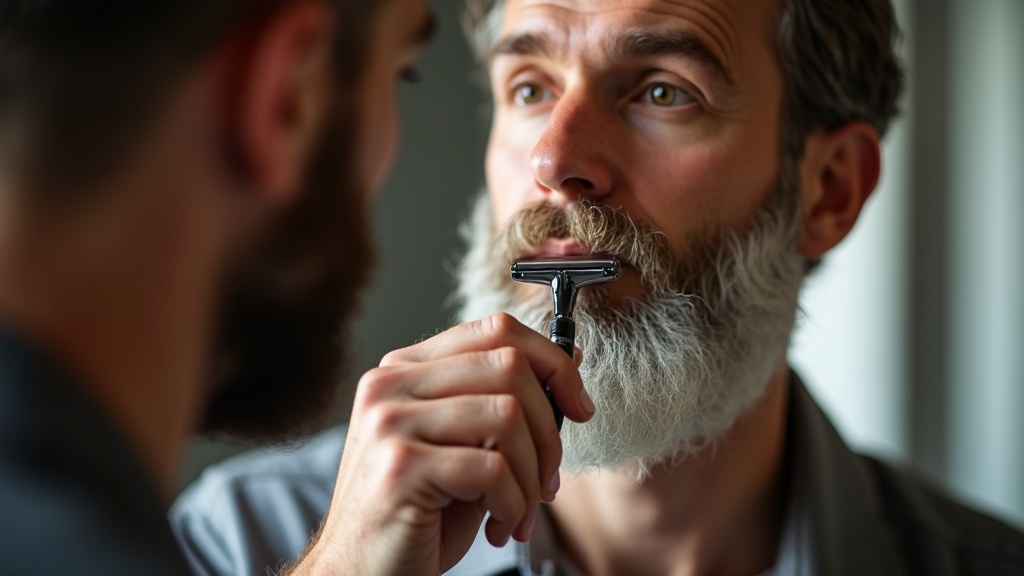
When you shave, the blade sits at a fixed angle (typically around 30 degrees), and you use light, short strokes with the grain of your beard. There’s no need to apply pressure – the weight of the razor does the work. This is one of the biggest adjustments for cartridge razor users, and one of the most important techniques to get right.
A Brief History: How Safety Razors Changed Shaving
The safety razor as we know it was popularized by King Camp Gillette, who patented his disposable blade design in 1904. Before that, men relied on straight razors – requiring a steady hand, a skilled barber, or years of practice. Gillette’s genius was making affordable, replaceable blades accessible to the average man.
Through the early-to-mid 20th century, double-edge safety razors were the standard. Brands like Gillette, Schick, and Merkur dominated the market. Then in the 1970s, Gillette introduced the twin-blade cartridge razor, followed by the Mach3, Fusion, and eventually five- and six-blade systems. Each generation promised a closer shave – but came with a steeper price tag.
Today, there’s a global resurgence of interest in traditional wet shaving. Men and women alike are rediscovering the performance, economy, and ritual of the safety razor. The question is: why did we ever stop?
Safety Razor vs. Cartridge Razor: The Real Cost of Shaving
Let’s talk money, because this is where safety razors become impossible to ignore.
A typical cartridge replacement – think Gillette Fusion or Mach3 – costs anywhere from $3 to $6 per cartridge. If you shave daily or every other day, you might go through a cartridge every week or two. That’s $150-$300 per year just on blade refills, not counting shaving gel and the handle.
A double-edge safety razor blade? On average, about $0.10-$0.50 per blade. A 100-pack of quality blades (like Astra Platinum or Feather) costs around $10-$15. Each blade lasts roughly 5-7 shaves with proper rinsing and care. Do the math: you could shave for an entire year for the cost of a single pack of cartridge refills.
The upfront investment for a quality safety razor ranges from $30-$80. After that, ongoing costs are minimal. Over five years, the savings easily exceed $500 or more for most shavers.
Better Shave Quality and Less Irritation
Here’s what nobody tells you about multi-blade cartridge razors: those extra blades aren’t all cutting. The first blade lifts and cuts the hair. Blades two through five are dragging across already-shaved skin, causing micro-abrasions and irritation. This is the leading cause of razor burn, ingrown hairs, and that miserable tight, red feeling after shaving.
With a safety razor’s single blade, each stroke is clean and efficient. There’s less tugging, less friction, and dramatically less irritation – especially for people with sensitive skin or coarse, curly beard hair prone to ingrowns.
Many shavers also report a noticeably closer shave. Because you control the angle and pressure, you can adapt your technique to different areas of your face. Jawline, neck, upper lip – each requires a slightly different approach, and a safety razor gives you that precision.
Environmental Benefits: Less Plastic, Less Waste
The environmental case for safety razors is strong. A disposable cartridge razor or a plastic-handled multi-blade system generates significant plastic waste. Most cartridges are not recyclable through standard municipal programs, meaning billions of them end up in landfills every year.
A quality safety razor is built to last decades – some vintage Gillette razors from the 1950s are still in daily use. The blades themselves are thin steel and often recyclable (many shavers collect used blades in a small metal “blade bank” and recycle them as scrap metal). Over a lifetime of shaving, switching to a safety razor could save hundreds of pounds of plastic waste.
If sustainability matters to you, this is one of the simplest and most impactful swaps you can make in your daily routine.
Types of Safety Razors
Not all safety razors are the same. Here’s a quick rundown of the main types:
Double-Edge (DE) Safety Razors
The most common type. The blade is double-edged, meaning both sides of the blade are usable. You can flip the razor to use the other side mid-shave. DE razors come in three-piece designs (handle, top cap, base plate all separate), two-piece designs, and twist-to-open (TTO) butterfly designs.
Single-Edge (SE) Safety Razors
These use proprietary single-edge blades (thicker and more rigid than DE blades). Popular brands include OneBlade and Leaf Razor. They’re often recommended for beginners because the blade angle is more forgiving, though blade availability is more limited.
Adjustable Safety Razors
These allow you to dial in the blade gap (the distance between the blade edge and the safety bar), controlling how aggressive the shave is. The classic example is the vintage Gillette Adjustable. Great for shavers who want versatility – a mild setting for sensitive areas, a more aggressive setting for heavy stubble.
Best Safety Razors for Beginners
After testing well over a hundred razors over fifteen years, these are the two I recommend to every beginner, without hesitation:
Merkur 34C Heavy Duty Safety Razor
The Merkur 34C is the gold standard beginner razor. Made in Solingen, Germany, it features a short, sturdy handle with excellent grip, a closed comb base plate (mild and forgiving), and a satisfying heft that helps you maintain proper technique. The mild blade exposure makes it very forgiving of beginner errors while still delivering a great shave. It’s the razor I started with, and it’s still in my rotation today.
Edwin Jagger DE89
The Edwin Jagger DE89 is another top pick, made in Sheffield, England. It features a chrome-plated handle in a knurled pattern for secure grip, and pairs with a Gillette 7 O’Clock blade head for a consistently smooth, mild shave. It’s slightly longer than the Merkur 34C, which some shavers prefer. The DE89 is widely considered one of the best-looking entry-level razors available.
Both razors retail in the $30-$50 range and will last you for decades with basic care.
The Learning Curve: Tips for Your First Shaves
I won’t sugarcoat it – there is a learning curve. Your first week with a safety razor will require patience. Here’s how to make it easier:
- Use no pressure. Let the weight of the razor do the work. If you’re pressing, you’re doing it wrong.
- Maintain a 30-degree angle. The optimal blade-to-skin angle for most DE razors is around 30 degrees. Experiment slightly to find what works for your razor.
- Short strokes, with the grain. Start by shaving with the grain (the direction your hair grows). Once comfortable, you can add a cross-grain pass for a closer finish.
- Prep your skin. A hot shower or a warm, damp towel on your face before shaving softens the beard significantly. Don’t skip this.
- Use a quality shaving soap or cream. The slick, cushioning lather from a proper shaving soap or cream makes a huge difference compared to canned foam.
- Take your time. A proper wet shave takes 10-15 minutes. It’s a ritual, not a race.
Common Beginner Mistakes to Avoid
Based on years of helping friends and forum members get started, here are the mistakes I see most often:
- Applying too much pressure. This is the number one cause of razor burn and cuts for new safety razor users. Light touch, always.
- Wrong blade angle. Too steep (blade nearly perpendicular to skin) or too shallow (almost flat) will either scrape ineffectively or cut aggressively. Find your 30-degree sweet spot.
- Skipping skin prep. Jumping into a dry shave or skipping the pre-shave routine is asking for trouble. Always prep.
- Using too many different blades at once. I get it – the variety is exciting. But when you’re starting out, stick to one blade type for at least a few weeks so you can isolate what’s working and what isn’t.
- Giving up after one bad shave. Your first few shaves will likely not be your best. Stick with it. By week two or three, most beginners are getting excellent results.
Final Recommendation: Should You Make the Switch?
If you’re still asking yourself what are safety razors really about and whether the switch is worth it – here’s my honest answer after fifteen years: absolutely yes, for most people.
The combination of lower cost, better shave quality, reduced skin irritation, and lower environmental impact makes safety razors one of the best upgrades you can make to your daily routine. The learning curve is real but short. The investment is modest. The payoff is substantial.
Start with the Merkur 34C or the Edwin Jagger DE89, pick up a sampler pack of blades (so you can find your favorite), grab a good shaving soap, and give yourself two weeks. I’m willing to bet you’ll never go back to cartridges.
Welcome to the world of traditional wet shaving. Your face will thank you.
Tradeoffs, uncertainty & affiliate disclosure
A closer shave can require more passes and may reduce comfort. Product feel varies with razor, blade, lather, angle, pressure, beard growth, and personal preference. ClassicBlade does not imply that every mentioned item was purchased, used, measured, or independently tested.
Some links may be affiliate links. ClassicBlade may earn a commission at no added cost to you; commercial links do not stand in for evidence.
Leave a Comment