Alum Block for Shaving: What It Is, How to Use It, and Why I Never Skip It
Disclosure: This post contains affiliate links. As an Amazon Associate I earn from qualifying purchases at no extra cost to you.
After twenty years of wet shaving I have accumulated opinions about nearly everything — blade brands, brush knots, lather consistency, handle geometry. But if you asked me to name the single most underrated item in a wet shaver’s kit, I would not hesitate: it is the alum block.
Most beginners never hear about it. The shaving YouTubers who chase razor and soap reviews rarely spend five minutes on it. Yet the alum block has been a standard part of the post-shave routine since long before any of us were born, and for good reason. It does things that no aftershave balm or splash can replicate. If you are still working through the fundamentals, the guide to how to use a safety razor is a good place to start.
This is the guide I wish someone had handed me when I started.
What Is an Alum Block?
An alum block is a solid bar of potassium alum — potassium aluminum sulfate — a naturally occurring mineral salt that has been used in grooming and medicine for thousands of years. The ancient Egyptians used it as a deodorant. Barbers throughout the 19th and 20th centuries kept blocks on their stations as a matter of course.
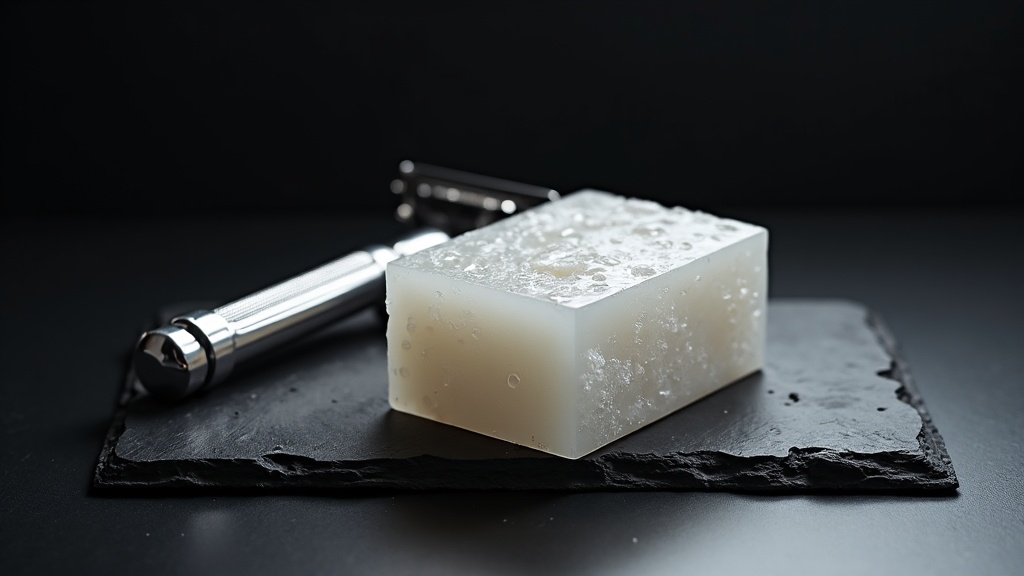
The blocks sold for shaving today are typically rectangular, about the size of a bar of soap, sometimes with a case or tray. They range from small travel sizes to full 100-gram blocks that will last you the better part of a year with daily use.
The two main types you will encounter:
- Potassium alum — the traditional form, mined or processed from alunite. This is what most classic alum blocks are made from.
- Ammonium alum — a synthetic variant. Functions similarly but some shavers report slightly more irritation. Read labels if you are sensitive.
When I say “alum block” throughout this guide, I mean potassium alum unless otherwise noted.
What Does an Alum Block Actually Do?
Four distinct things, and all of them useful:
1. Styptic Action — Stops Nicks and Weepers Immediately
This is the one most people know. Alum is a powerful styptic — it causes small blood vessels to contract, sealing minor cuts almost instantly. When you nick yourself (and you will, especially early on), wet the alum block and press it to the cut for ten seconds. The bleeding stops. No tissue paper, no styptic pencil required.
A styptic pencil is essentially alum in a concentrated, pointed form for targeting single cuts. An alum block serves the same function but over a larger area, making it more practical for the post-shave rub-down.
2. Antiseptic — Kills Bacteria Before They Cause Problems
Shaving opens micro-abrasions in the skin even when you don’t nick yourself visibly. The razor disturbs the very top layer of skin across every stroke. Alum’s antiseptic properties reduce the bacteria load on freshly shaved skin, which matters for anyone prone to razor bumps, folliculitis, or shaving rash.
This is why barbers used it routinely — not primarily for nicks, but as a hygiene standard applied to every client’s freshly shaved face.
3. Astringent — Tightens Pores and Reduces Irritation
Alum contracts the skin tissue, closing open pores and reducing post-shave redness. If you have ever noticed your face feeling raw or looking blotchy after shaving, an alum rub can calm this significantly within seconds.
I have introduced many people to alum blocks over the years, and the reaction is almost always the same: they rinse it off after thirty seconds, look in the mirror, and say “why didn’t I know about this sooner.”
4. Feedback Tool — Tells You Where Your Technique Needs Work
This one surprises people. Alum stings on irritated skin. The more it stings when you apply it, the more your shave disturbed your skin. A properly executed shave with good angle, correct pressure, and an appropriate blade will produce almost no sting at all.
When I was learning, my alum block burned noticeably after most shaves. Over time, as my technique improved, the sting faded. Now a post-shave alum application feels like almost nothing. If it stings, I review what I did — pressure too heavy? Blade too aggressive? Went against the grain unprepared?
The alum block is an honest diagnostic tool in a way that mirrors and feelings cannot match.
How to Use an Alum Block After Shaving
The process is simple and takes under a minute.
- Rinse your face with cold water after your final shave pass. Cold water closes pores and preps the skin for the alum. Warm or hot water works against you here.
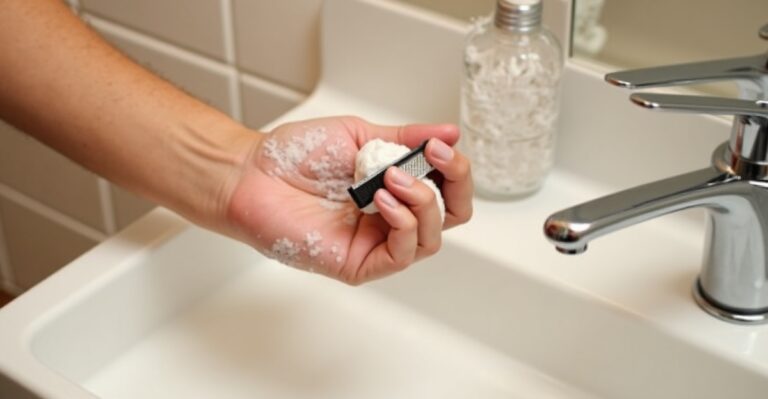
- Wet the alum block under cold water. You want it damp, not soaking.
- Rub it across your shaved areas with light, even strokes. Cover the full area you shaved — neck, jaw, under the nose, cheeks. This takes fifteen to twenty seconds.
- Leave it on for thirty to sixty seconds. Do not rinse immediately. Let the alum work — antiseptic action, pore tightening, styptic effect on any weepers.
- Rinse off with cold water. Some shavers apply aftershave directly over the alum. I rinse first — residue can affect how some balms absorb.
- Dry and apply your aftershave or balm. Proceed as normal.
That is the full routine. It adds roughly forty-five seconds to your shave. The benefits are worth it every time.
For Individual Nicks During the Shave
For cuts that are still bleeding during the shave, wet the corner of your alum block and press it directly onto the nick with gentle pressure. Hold ten to fifteen seconds. The bleeding should stop. Stubborn cuts occasionally need a second application.
The corner of the block works better than the flat face for targeted application. Over time the block will develop a worn corner naturally from this use.
The Best Alum Blocks for Wet Shavers
A few brands worth knowing. All of these are pure potassium alum unless otherwise noted.
Razorock Alum Block
My current daily driver. The Razorock block is 100 percent potassium alum, generously sized, and comes with a plastic case that actually works — the lid stays on and drainage is adequate. The price is fair and quality is consistent across batches. If you want one block that does everything well and comes from a brand that understands wet shaving, start here.
Check Razorock alum block on Amazon →
Osma Laboratoires Alum Block
The French option, and a classic. Osma blocks are pure potassium alum with no additives, made in France, and have been around for decades. Simple packaging — white block, white box — and excellent performance. Slightly harder texture than some alternatives, which means it lasts longer but needs a touch more water to glide smoothly. A premium choice that many veteran wet shavers use exclusively.
Check Osma alum block on Amazon →
Proraso Alum Block
Proraso makes an alum block that is widely available and reasonably priced. Pure potassium alum, comes with a plastic case, decent size. If you can find it locally it is a solid first block to try. The Proraso brand has earned trust in the wet shaving community over decades and this product reflects that consistency.
Check Proraso alum block on Amazon →
How to Care for Your Alum Block
- Let it dry completely between uses. The biggest enemy of an alum block is standing water. A wet block dissolves slowly and leaves crystalline deposits in your sink. Store it on a small dish or in a case where air can circulate.
- Use the case if it came with one. Most better blocks include a tray for exactly this reason.
- Handle carefully in wet environments. Alum is a mineral salt and will shatter if dropped on tile. The block is slippery when wet.
- Rinse after each use to remove skin debris or soap residue. A quick cold water rinse is sufficient.
A 100-gram block with daily use will last six months to a year. Cost per shave rounds to essentially zero once you own one.
Common Questions
Is an alum block the same as a styptic pencil?
Similar but not identical. Both contain alum compounds, but a styptic pencil uses a more concentrated stick form designed for precise application to individual cuts. An alum block treats the entire shaved area. Many shavers keep both.
Does it sting badly?
On well-shaved skin: barely perceptible. On irritated, over-scraped skin: noticeably uncomfortable for a few seconds. This is useful diagnostic information, not a reason to avoid it. Rinse with cold water and the sensation passes immediately.
Can I use it on my neck?
Yes, and you especially should. The neck is where most shavers have the most difficulty — grain changes direction, skin is often more sensitive, and most nicks live there. Alum’s antiseptic and astringent effects are most valuable exactly there.
Can women use alum blocks for leg shaving?
Absolutely. Everything here applies equally to leg and underarm shaving. The principles are identical: cold water rinse, wet block, apply to shaved areas, wait, rinse, moisturize.
Is it safe for sensitive skin?
Generally yes. Pure potassium alum is non-toxic, has been used on skin for thousands of years, and is hypoallergenic for most people. A small number of individuals are sensitive to alum salts — if you experience significant irritation beyond a momentary sting, discontinue. But most people with sensitive skin tolerate it well and find it improves post-shave condition.
Do I still need aftershave if I use an alum block?
They serve different purposes. Alum handles antiseptic, styptic, and pore-tightening. Aftershave handles hydration, fragrance, and skin conditioning. I use both every shave — the alum comes first, gets rinsed off, and then aftershave goes on. They complement rather than replace each other.
The Bottom Line
The alum block is cheap, lasts nearly a year, does four useful things better than anything else in the shaving cabinet, and costs less than a cup of coffee per month. There is no rational argument against owning one if you shave with a safety razor.
I have used one on almost every shave day for fifteen of my twenty years in wet shaving. The five years I didn’t were the first five — when I didn’t know it existed. That is the only reason I don’t have twenty years of experience instead of fifteen.
Buy a Razorock or Osma block, use it for a week, and report back. I am confident you will wonder how you ever shaved without it.
Thomas Hargrove has been wet shaving for over twenty years and writes about traditional shaving technique, equipment, and products at Classic Blade.

About Thomas Hargrove
Wet Shaving Enthusiast · 23 Years on the Blade
Thomas Hargrove has been wet shaving for 22 years and has personally tested over 300 razors, blades, and soaps. A longtime r/wicked_edge community member and Discord moderator, he founded classicblade.com to help men discover the superior shave quality and significant savings of traditional wet shaving. Read more →