
The quick take
Verdict, audience & limits
Why Are More Blades on a Razor Better? The Truth About Blade Count
Why Are More Blades on a Razor Better? The Truth About Blade Count After testing over 300 razors in 23 […]
Who this is for
Readers deciding whether this shaving topic, method, or product category fits their routine and preferences.
What this cannot promise
A universal result, irritation-free shave, medical outcome, or firsthand product test unless that specific use is explicitly documented.
Specifications & source boundary
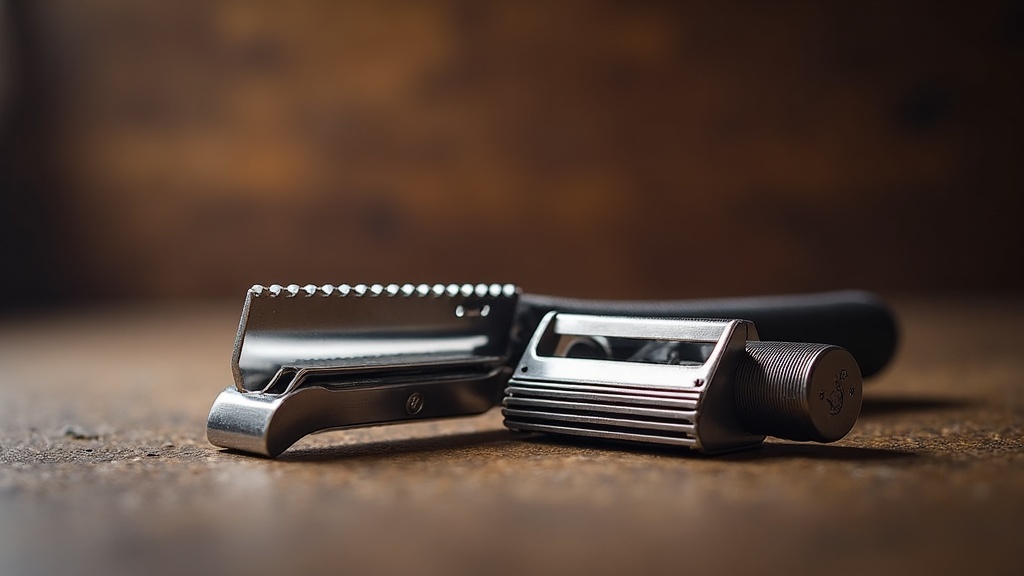
Model dimensions, materials, blade compatibility, and loading instructions should be checked against the maker’s documentation for the exact product and version. Manufacturer specifications are not independent measurements, and a photograph is not evidence of a product test.
How to read the evidence
Applies only where a specific razor, blade, or product and its conditions are explicitly identified.
Maker-supplied details should be checked against the exact model, market, and version.
A cautiously summarized pattern across identified sources, with disagreement acknowledged.
Background or explanatory framing, not a testing credential or objective measurement.
A subjective choice about feel, cost, convenience, or ritual—not a universal recommendation.
Technique variables
Change one thing. Pay attention.
Lather & preparation
Soften the beard with water, build a comfortably slick lather, and reapply before another pass.
Angle & pressure
Use light pressure and a shallow, familiar angle appropriate to the razor. Do not press harder to compensate for tugging.
Direction & passes
Begin with the grain, use fewer deliberate passes, and let comfort matter more than chasing perfect closeness.
Blade handling
Follow loading instructions, hold only unsharpened sides, and keep cutting edges away from fingers.
Use light pressure, fewer deliberate passes, and stop for pain or persistent irritation. Keep unused blades dry, secure, and away from children and pets. Place used blades in a closed puncture-resistant container and follow local disposal guidance. This is general grooming guidance, not medical advice.
Why Are More Blades on a Razor Better? The Truth About Blade Count
After testing over 300 razors in 23 years of wet shaving, I can tell you straight: more blades aren’t better—they’re a marketing gimmick that actually makes your shave worse. The best shave I’ve ever gotten came from my grandfather’s single-blade 1959 Gillette Fatboy, not from any five-blade cartridge monstrosity.
The razor industry wants you to believe that stacking more blades onto a cartridge gives you a closer, smoother shave. But here’s what two decades of daily shaving has taught me: more blades mean more passes over your skin, more irritation, more ingrown hairs, and a shave that doesn’t even get as close as a single sharp blade wielded with proper technique.
The Multi-Blade Marketing Myth
Remember when Gillette’s Mach 3 came out with three blades and we thought that was excessive? Now we’ve got five-blade cartridges, and I’ve even seen prototypes with six or seven. The marketing departments at these companies have convinced generations of men that blade count equals quality.
The pitch sounds logical enough: the first blade lifts the hair, the second blade cuts it, the third blade cuts it even closer, and so on. But in practice, it doesn’t work that way. What actually happens is that each blade makes a pass over your skin, creating multiple opportunities for irritation, nicks, and razor burn.
I’ve tested premium five-blade cartridge razors alongside traditional single-blade safety razors, and the single blade wins every single time for closeness, comfort, and skin health.
How Multi-Blade Razors Actually Work
The theory behind multi-blade cartridges is called “hysteresis.” The first blade pulls the hair up slightly from the follicle, and subsequent blades cut it while it’s extended, theoretically cutting below the skin line for an ultra-close shave.
Here’s the problem: when that hair retracts back into the follicle after being cut below skin level, it can become ingrown. This is why guys who use multi-blade cartridges often struggle with razor bumps and ingrown hairs, especially on the neck.
Additionally, with each blade making contact with your skin, you’re multiplying the friction and potential for irritation. Five blades mean five opportunities to scrape away protective skin oils and cause micro-abrasions. Your skin doesn’t need that kind of punishment.
The Real Problems with More Blades
Increased Irritation and Razor Burn
Every blade that touches your face creates friction. With a five-blade cartridge, you’re dragging five edges across your skin with every stroke. That’s five times the irritation potential compared to a single blade. Over the course of a full shave, that adds up to significant skin stress.
I’ve seen countless guys with perpetually red, irritated skin who blame their “sensitive skin” when the real culprit is the multi-blade cartridge they’re using. Switch to a quality single-blade safety razor and most of that irritation disappears within a week.
Ingrown Hairs and Razor Bumps
The hysteresis effect I mentioned earlier is a recipe for ingrown hairs. When hair is cut below the skin surface, it has nowhere to go but sideways as it grows back. This creates those painful, unsightly bumps that plague so many men who shave with cartridge razors.
A single sharp blade, used at the proper angle with good technique, cuts the hair at or just above skin level. This gives you a close shave without the ingrown hair problem.
Clogging and Hygiene Issues
Ever notice how quickly multi-blade cartridges clog up with hair, shaving cream, and dead skin? Those tightly-packed blades create narrow channels that trap debris. You spend half your shave rinsing the cartridge under running water, and even then, you can never get it completely clean.
This creates a hygiene issue. Trapped moisture and organic matter make an ideal breeding ground for bacteria. A single-blade razor rinses clean in seconds.
Cost
Let’s talk money. A pack of four premium five-blade cartridges costs $20-25. That’s $5-6 per cartridge, and they need replacing every week or two. Meanwhile, I buy 100 high-quality double-edge blades for $10-15. Each blade lasts me 3-5 shaves, meaning 100 blades give me 300-500 shaves for less than fifteen bucks.
Why Single-Blade Razors Deliver Better Results
When you use a traditional safety razor or straight razor with a single blade, you’re in control of the shaving angle, pressure, and direction. This allows you to adapt your technique to the contours of your face and the direction of your hair growth.
A sharp single blade, properly angled, slices through hair cleanly with minimal tugging. You make multiple passes—with the grain, across the grain, and against the grain if needed—building up to a close shave gradually. This gives you better results with less irritation than dragging five dull blades across your face in one aggressive pass.
The key word there is “sharp.” Multi-blade cartridges dull quickly because you’ve got multiple edges degrading simultaneously. With a safety razor, you swap in a fresh blade for pennies whenever you notice any tugging or pulling. You’re always working with an optimally sharp edge.
Single-Blade vs. Multi-Blade: Direct Comparison
| Factor | Single-Blade Safety Razor | Multi-Blade Cartridge |
|---|---|---|
| Closeness of Shave | Extremely close when proper technique used; adjustable based on skill | Close initially, but dulls quickly; can cut below skin causing issues |
| Skin Irritation | Minimal with proper prep and technique; single point of contact | High; multiple blades create repeated friction |
| Ingrown Hairs | Rare; cuts at or above skin level | Common; hysteresis effect cuts below skin |
| Cost Per Shave | $0.03-0.05 per shave | $2.50-3.00 per cartridge (3-7 shaves) |
| Learning Curve | Moderate; requires technique development | Low; designed for ease of use |
| Blade Sharpness | Stays sharp; easy to replace frequently | Dulls quickly; expensive to replace |
| Hygiene/Cleaning | Rinses completely clean in seconds | Traps debris between blades; difficult to clean thoroughly |
| Environmental Impact | Minimal; small recyclable blades | High; large plastic cartridges in landfill |
When Multi-Blade Razors Might Make Sense
I’m not going to tell you that multi-blade cartridges are useless for everyone. There are specific situations where they might be the practical choice, even if they’re not optimal.
If you’re traveling light and don’t want to pack a safety razor and blades, a disposable cartridge razor is convenient. If you’re truly shaving in a rush and can’t take the time to do proper prep and technique, a cartridge is faster. If you have extremely light facial hair and barely need to shave, the downsides of multi-blade razors won’t affect you as much.
But for your daily shave, for the health of your skin, and for the quality of your results, a single sharp blade is superior. I’ve tested this over thousands of shaves with hundreds of different razors. The evidence is overwhelming.
My Recommendation
If you’re currently using a multi-blade cartridge and experiencing irritation, razor burn, or ingrown hairs, I strongly encourage you to try wet shaving with a traditional safety razor. Get yourself a quality beginner-friendly safety razor, a good shaving brush, and some quality shaving soap.
Yes, there’s a learning curve. Your first few shaves might not be perfect. But within a week or two, you’ll be getting consistently better shaves than you ever got from a five-blade cartridge, and your skin will thank you for it.
The razor companies have spent millions convincing you that more blades equal better shaves. Don’t fall for it. Sometimes the old ways are better, and this is one of those times.
Frequently Asked Questions
Do more blades really give a closer shave?
No. While multi-blade razors can cut hair very short (sometimes below the skin surface), this doesn’t translate to a “better” shave. A single sharp blade used with proper technique provides an equally close shave without the irritation, ingrown hairs, and razor burn that multiple blades cause. Closeness isn’t just about how short the hair is cut—it’s about achieving that result without damaging your skin.
Why do razor companies keep adding more blades?
Marketing and profit margins. Adding another blade gives companies a reason to release a “new and improved” version, charge more money, and keep customers in their proprietary cartridge ecosystem. It’s not about performance—it’s about creating product differentiation and maintaining high prices. A five-blade cartridge costs pennies to manufacture but sells for $5-6.
Will a single-blade razor work for sensitive skin?
Absolutely. In fact, a single-blade safety razor is often the solution for sensitive skin, not the problem. Most “sensitive skin” issues are actually caused by multi-blade cartridges creating too much friction and irritation. When you switch to a single sharp blade with proper prep (hot water, quality soap, good lather), you reduce irritation dramatically. I’ve seen guys who thought they had sensitive skin discover they just had the wrong razor.
How often should I replace a single blade vs. a multi-blade cartridge?
Replace a double-edge safety razor blade every 3-5 shaves, depending on your hair coarseness and personal preference. Since blades cost 3-5 cents each, you can afford to swap them out frequently and always shave with an optimally sharp edge. Multi-blade cartridges should be replaced every 5-10 shaves, but at $5-6 per cartridge, most guys push them too long and end up shaving with dull blades that tug and irritate.
Can you get a close shave without going against the grain?
Yes, though it takes good technique. With a properly prepared beard and a sharp single blade, you can achieve a very close shave using just with-the-grain and across-the-grain passes. Many wet shavers skip the against-the-grain pass entirely to minimize irritation and ingrown hairs. The key is gradual reduction through multiple passes with a sharp blade, rather than trying to get baby-smooth in one aggressive swipe with multiple dull blades.
Tradeoffs, uncertainty & affiliate disclosure
A closer shave can require more passes and may reduce comfort. Product feel varies with razor, blade, lather, angle, pressure, beard growth, and personal preference. ClassicBlade does not imply that every mentioned item was purchased, used, measured, or independently tested.
Some links may be affiliate links. ClassicBlade may earn a commission at no added cost to you; commercial links do not stand in for evidence.



Leave a Comment