Best Shaving Brushes of 2026: Badger, Boar and Synthetic
I’ve been lathering up a shaving brush every single morning for over twenty years. In that time I’ve worked through badger, boar, and every synthetic fiber a manufacturer has thought to throw at me. If you’re just getting into wet shaving — or if you’ve been using the same old brush for a decade and wonder what you’re missing — this guide is for you.
The brush is arguably the most underrated tool in your shaving kit. A great razor with a mediocre brush will give you a mediocre shave. A great brush can turn even a modest soap into something transcendent. Let’s get into it.
Why Your Shaving Brush Matters
A shaving brush does three things that a modern cartridge-and-foam setup simply can’t replicate. First, it hydrates your shaving soap or cream and builds a rich, creamy lather loaded with tiny air bubbles that cushion the blade. Second, it exfoliates — the bristles scrub dead skin cells off your face as they work the lather in. Third, it lifts each individual hair so the blade cuts from the base rather than pushing the hair down. The result is a closer, more comfortable shave with dramatically less irritation.
None of that happens with a can of pressurized foam. So if you’ve made the move to wet shaving, the brush is where it starts.
Badger vs. Boar vs. Synthetic: What’s the Difference?
Badger Hair
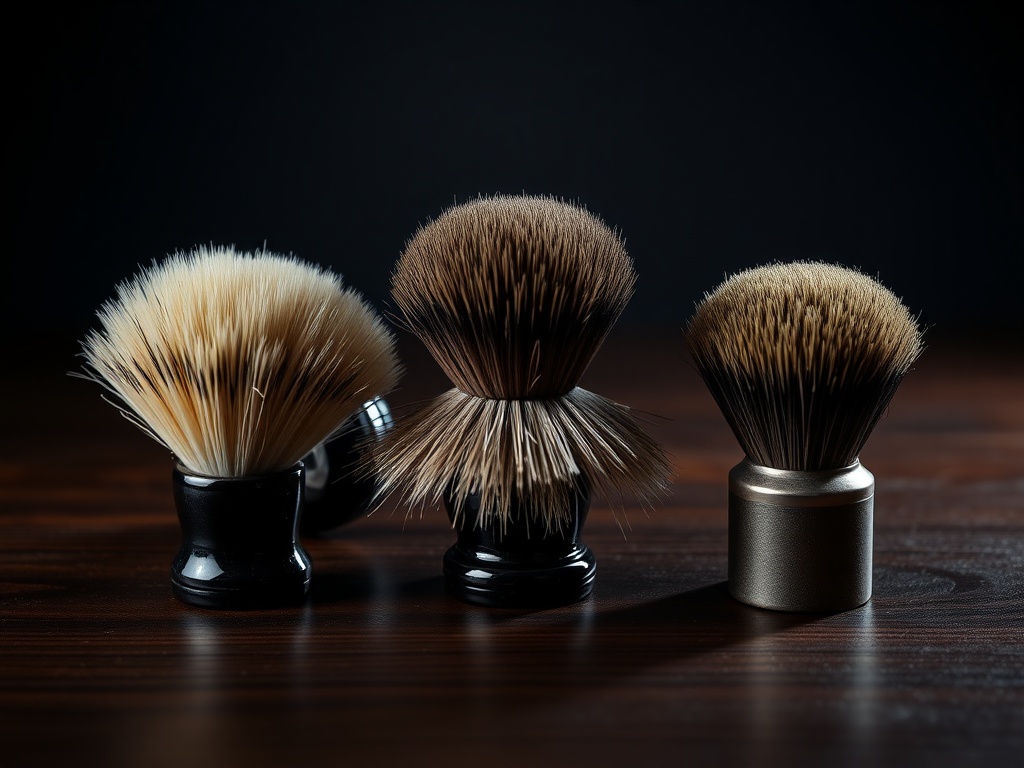
Badger has been the gold standard for well over a century. The fibers are naturally hollow and absorb water readily, which means the brush retains heat and helps keep your lather warm throughout a multi-pass shave. Badger hair is graded by where it comes from on the animal’s body and how it’s processed. From budget to luxury, you’ll encounter:
- Pure/Best Badger — coarser fibers, more scrubby, great backbone. Good entry point.
- Super/Finest Badger — softer tips, denser knot, noticeably improved face feel. The sweet spot for most shavers.
- Silvertip Badger — the pinnacle. Hairs are taken from the badger’s neck area, naturally light at the tips, incredibly soft. Pillow-soft on the face.
The tradeoff: quality badger brushes cost real money, and break-in time is real. A new badger brush may have a faint “wet dog” smell for the first few uses. It fades. Give it a week.
Boar Hair
Boar hair is the workhorse. It starts stiff and scritchy right out of the box, but it splits at the tips with use and becomes wonderfully floppy and soft over time. Boar brushes are cheap, durable, and offer excellent backbone for face lathering — they really dig into the soap puck and load up fast. Italian brands like Omega and Semogue have been making boar brushes for generations, and their products remain outstanding value even at budget prices.
The only catch: that break-in period is real, often 2–4 weeks of regular use. If you’re impatient, start with synthetic.
Synthetic Fiber
Synthetic brushes have improved dramatically in the past five to seven years. Modern synthetic knots — particularly the “fan” or “tuxedo” style fibers — are astonishingly soft, dry fast, and generate lather just as well as badger in most tests. They’re also vegan-friendly and significantly cheaper at most price points.
The one genuine difference I notice is that synthetics don’t retain heat as well as badger. On a cold morning in January, my silvertip keeps the lather warm for three full passes. My synthetic gets the job done, but it’s not quite that luxurious. For most people most of the time, though? A quality synthetic is excellent.
Best Shaving Brushes of 2026: My Top Picks
Best Overall: Muhle Silvertip Fibre Brush (STF)
I don’t give out “best overall” lightly. The Muhle STF earns it. This is technically a synthetic brush — the STF stands for Silvertip Fibre — but Muhle’s proprietary fiber is so convincing in use that countless forum members have passed off the STF as natural hair to experienced shavers in blind tests. It face-lathers beautifully, bowl-lathers beautifully, is pillowy soft right from day one, and the handle construction is premium German engineering: solid, balanced, and beautiful.
The STF is available in several handle styles. The VIVO in chrome and black is my personal daily driver. At around $60–$75, it’s an investment, but you’ll use it every morning for years.
Check current price on Amazon →
Best Badger: Edwin Jagger Best Badger Shaving Brush
Edwin Jagger is a Sheffield institution. Their Best Badger brushes use mid-grade badger hair that strikes the ideal balance between soft tips and backbone. The knot is hand-tied, the handle is resin (various colors and styles available), and the whole package is built to last decades. I’ve had my Edwin Jagger for eight years and it shows no sign of shedding.
If you’re buying your first badger brush, this is where to start. It performs above its price, it’s available in sizes from 21mm to 26mm knots, and it’ll convert you to wet shaving permanently.
Check current price on Amazon →
Best Boar: Omega 10049 “Pro 49”
The Omega Pro 49 is legendary in wet shaving communities for good reason. At under $15, it might be the best value object in the entire hobby. The boar knot is large (26mm), dense, and breaks in beautifully over four to six weeks of regular use. The handle is a classic barber-shop style in white resin.
This is the brush I recommend to every beginner who wants to try wet shaving without spending much money. It will make you better lather than anything you’ve used before. Once it’s broken in, you’ll be stunned that it costs less than a movie ticket.
Check current price on Amazon →
Best Budget Synthetic: Razorock Plissoft Monster
Razorock’s Plissoft line uses a soft synthetic fiber that’s honestly competitive with brushes costing five times more. The Monster variant has a huge 26mm knot that holds a massive amount of lather — great for head shavers or anyone who takes three or more passes. At around $14, this is the easiest recommendation I make. Buy it as a backup, buy it for travel, buy it as a first brush. You cannot go wrong.
Check current price on Amazon →
Best Luxury: Simpson Chubby 2 Best Badger
If budget is no object and you want the finest craftsmanship Britain has to offer, look at Simpsons. The Chubby 2 in Best Badger is a compact, dense powerhouse — the shape concentrates heat, the hair quality is exceptional, and owning a Simpson just feels like a statement about how seriously you take this ritual. These brushes are often passed down through generations. The Chubby 2 in Silvertip is even better, but the price jumps considerably. Best Badger is the sweet spot.
Check current price on Amazon →
Best for Beginners: Perfecto Pure Badger
The Perfecto 100% Pure Badger shows up near the top of Amazon’s bestseller list for good reason. It’s affordable, widely available, returns consistent lather, and gives beginners a real badger experience without committing serious money. The handle is comfortable, the knot sheds minimally, and the price point makes it zero-risk. If you’ve never used a shaving brush before, start here.
Check current price on Amazon →
How to Choose the Right Shaving Brush
Face Lathering vs. Bowl Lathering
How you build your lather affects which brush style works best. Face latherers — those who load the brush and work the lather directly on their skin — benefit from a brush with good backbone (stiffer fibers) that can paint lather efficiently. Boar and badger grades with firmer fibers suit this method. Bowl latherers work the soap in a separate bowl before applying it. A fan-shaped knot or bulb shape loads and distributes lather easily here.
Knot Size
Knot diameter determines how much surface area the brush covers and how much lather it holds. For most faces, 22mm to 24mm is ideal — enough coverage without excess bulk. Head shavers or those with large faces will appreciate 26mm or 28mm brushes. Beginners: don’t overthink this. A 24mm brush covers nearly everything and is easy to maneuver.
Handle Height and Material
This is more about ergonomics than performance. Shorter handles give more control; taller handles suit those who shave with an overhead grip. Resin handles are lightweight and warm to the touch. Metal handles (chrome, brass) feel premium but can get slippery when wet — grip texture matters on these. I prefer shorter, fatter handles with good grip. After twenty years, it’s personal preference.
How to Break In and Care for Your Shaving Brush
Breaking In a New Brush
Badger brushes may shed a few hairs in the first week — this is normal and will stop. Boar brushes will feel stiff at first; use them daily and they’ll bloom and soften. Synthetics need no break-in at all.
For any new brush, soak it in warm water for 1–2 minutes before first use. Shake out excess water, load with soap, and lather normally. Don’t be rough — let the brush do the work.
After Each Use
Rinse thoroughly under warm running water, squeezing the knot gently to flush out all soap. Shake out excess water, then either hang the brush upside down in a stand or lay it on its side. Never store a wet brush upright on its handle — water pools at the base of the knot where hair meets resin, and over time this degrades the glue holding the knot. A brush stand is a $5 investment that doubles the life of your brush.
Deep Cleaning
Every few months, soak the knot in a solution of warm water and a small amount of borax or clarifying shampoo for 10 minutes, then rinse thoroughly. This removes mineral buildup from hard water and soap residue. Your brush will perform like new.
Frequently Asked Questions
Is badger hair worth it over synthetic?
For most shavers, a quality synthetic like the Muhle STF or Razorock Plissoft will perform just as well as mid-grade badger and require no break-in. If you want maximum heat retention and the ritual feel of natural hair, badger — especially silvertip — is worth the premium. But don’t let the marketing convince you that synthetic means inferior. That was true in 2010. It isn’t true today.
How long should a shaving brush last?
A quality badger or boar brush, cared for properly, should last 10–15 years or more. I have brushes in regular rotation that are over a decade old. Synthetic brushes may degrade slightly faster — the fibers can lose their spring after several years of daily use — but a good synthetic should still give you five to eight years easily.
What size shaving brush should I get?
Start with a 24mm knot. It’s large enough to cover your face efficiently, small enough to maneuver around the contours of your nose and chin, and versatile for both face and bowl lathering. From there, you’ll develop preferences. Many shavers end up owning several brushes in different sizes for different moods and applications.
Can I use a shaving brush with canned foam?
Technically, yes. Practically, no — you’re defeating the purpose. A shaving brush earns its keep with a proper shaving soap or cream that rewards being loaded and lathered. If you’re still using canned foam, that’s the thing to upgrade first, not the brush. Pair your new brush with a good croap or hard soap and you’ll understand immediately why wet shavers get evangelical about this stuff.
The Bottom Line
After twenty years and more brushes than I care to count, here’s where I land: the best shaving brush is the one you’ll actually use every day. For most people, that means the Omega Pro 49 (boar, best value on the planet), the Razorock Plissoft (synthetic, zero learning curve), or the Edwin Jagger Best Badger (natural hair, perfect upgrade step). For those ready to spend for the best, the Muhle STF is where I’d put my money — it’s the intersection of performance, durability, and that indefinable daily-ritual satisfaction.
Whatever you choose: soak it, load it slowly, use circular motions, and don’t rush. The brush will do the work. That’s the whole point.