Edwin Jagger DE89 Review: The British Classic Tested
Affiliate disclosure: This post contains affiliate links. If you purchase through my links, I may earn a small commission at no extra cost to you. I only recommend products I’ve personally tested and trust.
If you’ve spent more than five minutes researching safety razors, you’ve almost certainly come across the Edwin Jagger DE89. After twenty years of wet shaving — from straight razors to aggressive open-combs — I keep coming back to this British-made classic whenever someone asks me where to start. So let me give you my honest, experience-backed Edwin Jagger DE89 review.
My First Encounter with the DE89
I’ll be honest: I didn’t pick up the DE89 myself until about twelve years into my wet shaving journey. By that point I was deep into vintage Gillettes and adjustable razors, and I considered the DE89 a “beginner’s razor.” Then a friend handed me his at a shave meet, loaded with a Feather blade. That single pass changed my mind entirely. The DE89 wasn’t mild because it was simple — it was mild because Edwin Jagger engineered it that way. There’s a meaningful difference.
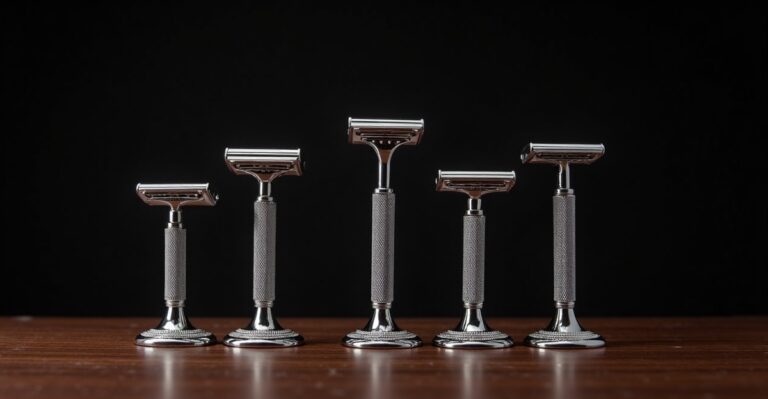
I’ve since owned three DE89s in different handle configurations — the classic chrome, the barley handle, and the lined handle — and I’ve gifted the razor to no fewer than eight people trying to make the switch from cartridges. Every single one of them stuck with it.
Edwin Jagger DE89 Review: Build Quality and Design
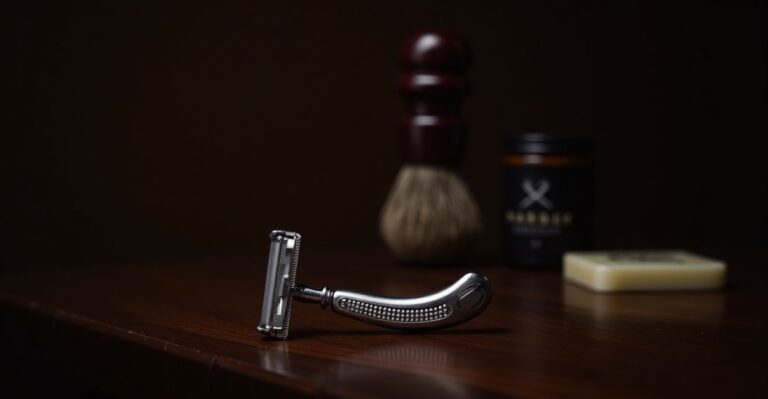
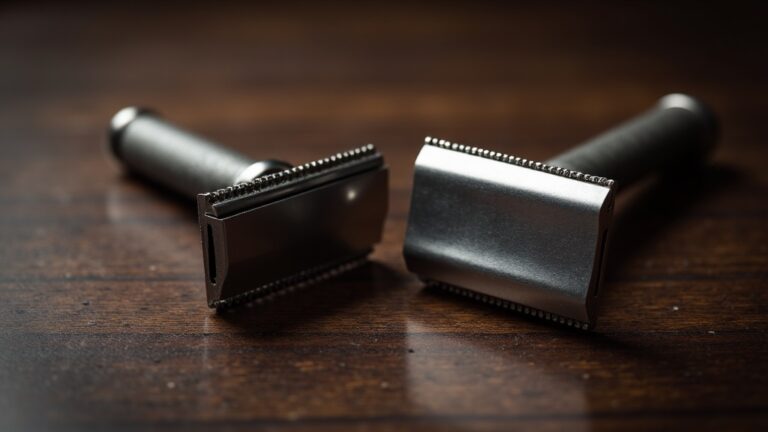
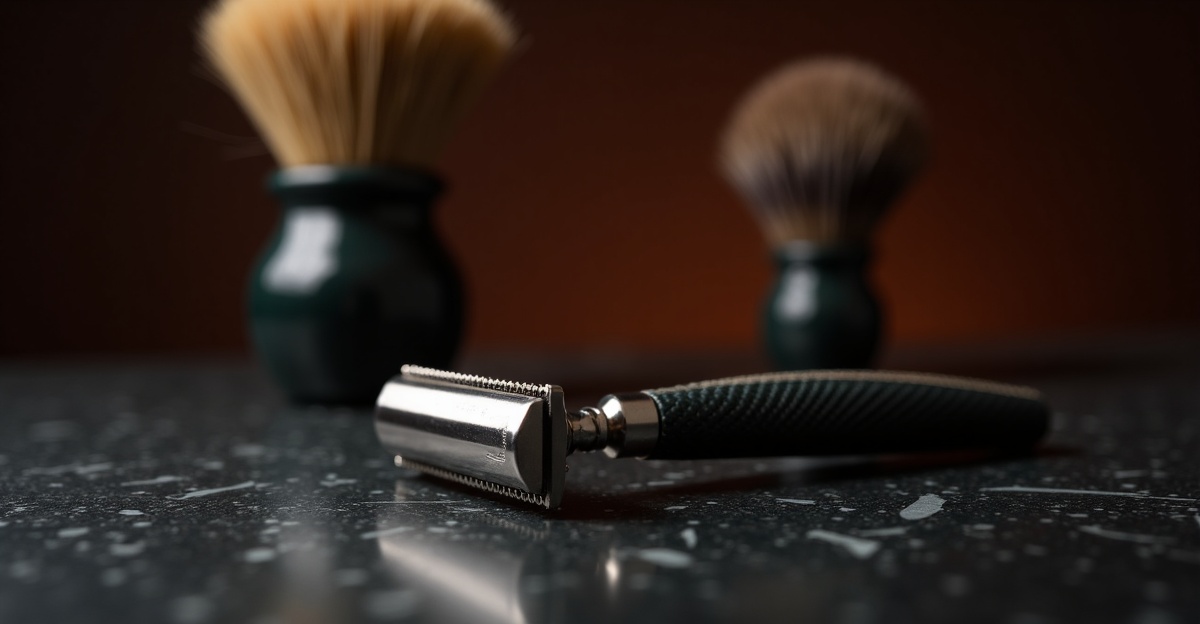
The DE89 head is chrome-plated zamak (zinc alloy), and the handles are available in dozens of styles — all chrome-plated brass or chrome-plated zamak depending on the variant. The construction feels premium without crossing into ostentatious territory. Knurling is crisp, the chrome is consistent, and the three-piece design (handle, base plate, top cap) comes apart cleanly for easy blade loading and rinsing.
Weight varies by handle but sits around 68–78 grams for the most popular configurations. That’s enough mass for gravity to do some of the work without fatiguing your wrist on a three-pass shave. The balance point sits naturally in the hand — not top-heavy, not handle-heavy.
Importantly, Edwin Jagger has been making this razor in Sheffield, England since the DE8-series launched in the early 2000s. That heritage matters. These aren’t mass-produced commodity razors; they’re made by a company that’s been a cutler since 1988.
Shave Performance: What the Edwin Jagger DE89 Review Numbers Really Mean
The DE89 is consistently described as “mild to medium” in terms of aggression, and that’s accurate — but the word “mild” undersells it. Here’s what the geometry actually delivers:
- Blade gap: approximately 0.73–0.76mm — on the mild side but not timid
- Blade exposure: slight positive exposure, which means the blade does engage with the skin rather than hiding entirely behind the guard
- Shave angle: forgiving — the sweet spot is wide, so technique errors don’t punish you with weepers
In practice, this translates to a razor that removes stubble efficiently on the first pass, gives you a respectable baby-butt-smooth (BBS) result on pass three with good prep, and rarely causes irritation even on the neck. For three decades of daily shaving, that’s the ideal profile.
I’ve tested it against Astra Superior Platinum, Feather Hi-Stainless, Personna Lab Blues, and Gillette Silver Blue blades. The DE89 is notably blade-forgiving — even aggressive blades like Feather feel tamed by the geometry. My personal preference pairing is Gillette Silver Blue or Astra SP for everyday use.
How Does the DE89 Compare to the Competition?
The two razors most frequently mentioned in the same breath as the DE89 are the Merkur 34C and the Parker 99R. Here’s my honest take after using all three:
- vs. Merkur 34C: The Merkur is slightly more efficient due to its heavier head, but it only comes in two handle styles and feels blockier in hand. The DE89 wins on aesthetics, handle variety, and overall “feel.”
- vs. Parker 99R: Parker’s butterfly-twist mechanism is convenient but introduces a mechanical weak point. The DE89’s three-piece design is more durable long-term and easier to clean thoroughly.
For most people, the DE89 is the right call. The only reason I’d steer someone toward the Merkur 34C is if they specifically want that extra efficiency bump and don’t care about handle options.
Who Should Buy the Edwin Jagger DE89?
After two decades in this hobby, here’s my honest recommendation framework:
Perfect for:
- Anyone switching from cartridge razors for the first time
- Shavers with sensitive skin or coarse, difficult facial hair
- Anyone who wants a “forever razor” they won’t outgrow
- Gift buyers — the presentation and reputation are hard to beat
Might want something else if:
- You’re an experienced wet shaver chasing maximum efficiency on tough beards — consider something like a Rockwell 6S or Karve CB at a higher setting
- You want adjustability built in — look at the Merkur Progress or Rockwell 6C
Where to Buy and What Blades to Use
The DE89 is widely available, but I’d recommend purchasing directly through Amazon for pricing, returns, and Prime shipping. The most popular configuration is the chrome-plated lined handle:
→ Edwin Jagger DE89 Safety Razor on Amazon (northlight07-20)
For blades, don’t cheap out. A 100-pack of quality blades costs less than a single cartridge refill pack, and the difference in shave quality is dramatic. My current go-to recommendation for DE89 users:
→ Astra Superior Platinum Double Edge Blades (100-Pack) on Amazon (northlight07-20)
The Astra SP is smooth, long-lasting, and affordable — a perfect match for the DE89’s geometry. Each blade lasts me 4–6 shaves, so 100 blades keeps you shaving for over a year.
Long-Term Ownership: Does the DE89 Hold Up?
My oldest DE89 is going on nine years. The chrome shows zero pitting, the threading remains crisp, and the base plate alignment is still true. Edwin Jagger’s quality control is genuinely excellent for the price point.
The only maintenance it needs: rinse thoroughly after each shave (the three-piece design makes this easy), and dry the threads if you live in a hard-water area. I store mine with the blade removed to prevent corrosion along the blade edge. That’s it.
I’ve seen DE89s passed down between generations at shave meets. That tells you everything you need to know about longevity.
The Verdict: Edwin Jagger DE89 Review Summary
After twenty years of wet shaving and every category of DE razor you can name, the Edwin Jagger DE89 remains one of the most consistently excellent safety razors ever made. It’s not the most aggressive, the most adjustable, or the most exotic — but it shaves extremely well, holds up for decades, and represents genuine craftsmanship at a fair price.
If you’re building a collection, keep one. If you’re just starting out, buy one and don’t look back for a good long while.
Rating: 4.7 / 5
Frequently Asked Questions
Is the Edwin Jagger DE89 good for beginners?
Yes — it’s one of the most recommended beginner safety razors precisely because its mild-to-medium geometry forgives technique errors while still delivering a close, comfortable shave. The wide sweet spot angle means you won’t punish yourself while you’re learning.
How long do DE89 blades last?
Most shavers get 4–7 shaves per blade depending on beard coarseness and prep quality. I average about 5 shaves with Astra SP blades in the DE89. Replace the blade when it starts to tug rather than glide — don’t push past that point.
What’s the difference between DE89 handle variants?
The head geometry is identical across all DE89 variants — only the handle changes. Common options include lined (ribbed), barley (knurled), and chrome-smooth. The lined handle is the most popular for grip; the barley is a favorite among wet shaving enthusiasts for aesthetics.
Is the Edwin Jagger DE89 worth the price?
At its typical retail price of $30–$45, the DE89 is excellent value for a hand-assembled, Sheffield-made razor with decades of proven durability. Compare that to the ongoing cost of cartridge refills and the math is obvious within six months.
Can I use any double-edge blade in the DE89?
Yes — the DE89 accepts all standard double-edge blades. I recommend starting with Astra Superior Platinum or Gillette Silver Blue. Avoid very aggressive blades like Feather until you’ve dialed in your technique.