Feather Razor Blades Review: The World’s Sharpest DE Blade Tested
Disclosure: This post contains affiliate links. As an Amazon Associate I earn from qualifying purchases at no extra cost to you.
Every wet shaver eventually arrives at the same crossroads: the Feather blade. The reputation precedes them – “sharpest DE blade in the world” is the claim, repeated so often it has become almost cliche. After twenty-plus years of traditional wet shaving and testing virtually every major blade brand on the market, I can give you my honest assessment of whether the Feather razor blades legend is earned – and whether they belong in your rotation.
Feather Razor Blades Review: The Basics
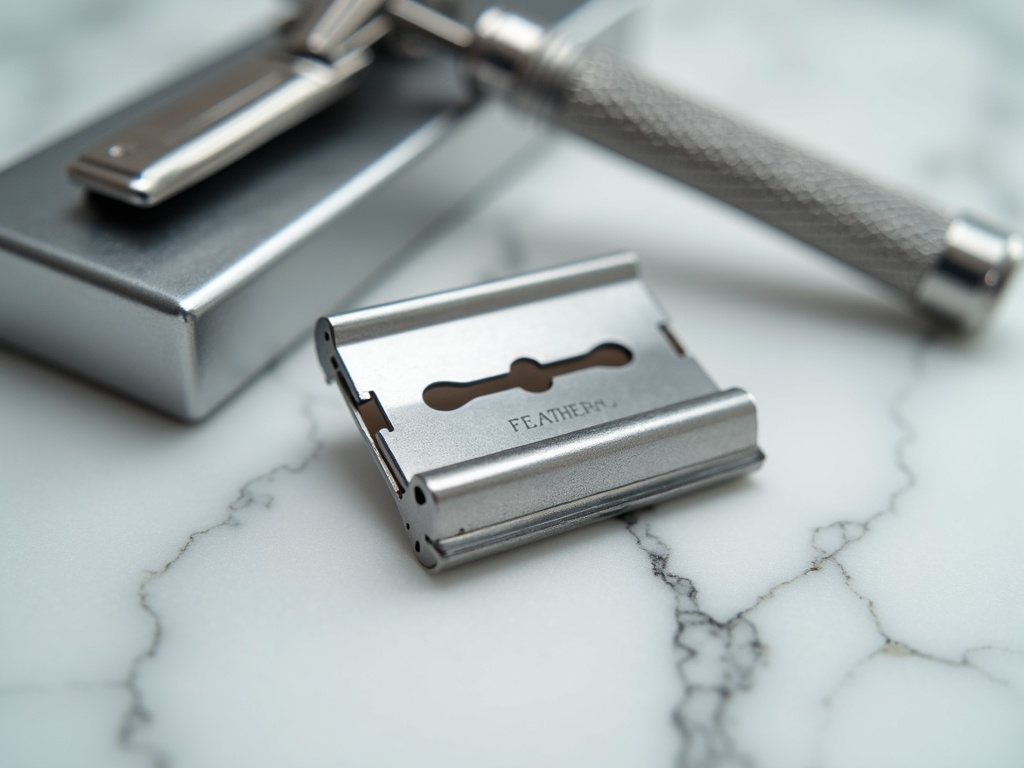
Feather Safety Razor Co., Ltd. is a Japanese manufacturer with roots going back to 1932. Their double-edge blades are produced to extraordinarily precise tolerances using platinum-coated high-carbon stainless steel. The manufacturing standards at Feather are legendary among wet shavers – their quality control is considered among the tightest in the industry, meaning you get exceptional consistency from blade to blade.
Feather blades are sold in packs of 10, 20, 50, and 100. At a slight premium over most competitors, they are not cheap – but for a blade you typically use two to four times before discarding, the cost per shave remains extremely reasonable.
Sharpness: The Legend Tested
Are Feather blades the world’s sharpest DE blade? In my experience and based on independent edge testing: yes, with some qualification. Feather consistently ranks at or near the top of sharpness measurements in every comparative analysis I have seen. They are perceptibly sharper than Gillette Silver Blues, Astra Platinums, Personna Platinums, and most other commonly recommended blades.
What does that sharpness translate to in practice? First-pass efficiency that is genuinely impressive. On my medium-density beard, Feathers consistently clear more hair per pass than virtually any other blade, requiring fewer strokes to achieve a close result. For shavers with tough, coarse beards, that efficiency is meaningful.
The qualification: sharpness comes with a demand for precision. Feather blades are unforgiving of poor angle and pressure technique. A blade this sharp used with improper form will produce nicks, weepers, and irritation. Beginners who reach for Feathers before developing their technique often conclude they are “too harsh” – when the reality is that technique needs development first.
Smoothness and Comfort
Here is where honest Feather razor blade reviews sometimes diverge from the hype. Sharpness and smoothness are related but not identical. The sharpest blade is not always the most comfortable for every shaver.
On my face, with properly mapped grain, good prep, and a blade-appropriate razor, Feathers are excellent. The sharpness means less dragging and fewer strokes, which reduces irritation from mechanical action. Properly used, they can be smoother than less sharp alternatives.
However, skin sensitivity matters. Shavers with very sensitive skin sometimes find Feathers too aggressive even with perfect technique – the razor-sharp edge can produce a level of tactile feedback that translates to irritation in sensitive areas. For these shavers, Polsilver Super Iridium or Gillette Silver Blue may be better choices despite being slightly less sharp.
Longevity
Feather blades typically give me two to four excellent shaves before the edge degrades noticeably. Some shavers with fine hair and careful technique get five or six shaves per blade; those with coarse, dense beards may find two shaves optimal. The edge degrades gracefully – there is rarely a sudden dropoff, just a gradual reduction in smoothness that tells you it is time to change.
Compared to budget blades that may give one or two acceptable shaves, Feathers longevity is solid, which helps justify the premium price.
Razor Pairing: Critical with Feathers
Feather blades demand appropriate razor pairing more than most blades. They perform best in mild to moderate razors – their sharpness provides the cutting power, so an aggressive razor is redundant and potentially harsh. I use mine primarily in my Merkur 34C and Henson AL13, both mild-to-moderate shavers where Feathers shine.
In an aggressive razor like a Merkur 38C or a vintage Gillette adjustable at high settings, Feathers can be overwhelming for most shavers. The combination of aggressive blade gap and maximum sharpness is best reserved for very experienced shavers with precise technique.
Who Should Use Feather Blades
Ideal for: Experienced shavers with established technique; those with coarse, dense beards who struggle to get a close shave with standard blades; anyone who finds other blades dragging or requiring too many passes.
Consider alternatives first if: You are a beginner (develop technique with a more forgiving blade first); you have very sensitive skin; you shave infrequently and your skin is not conditioned to regular wet shaving.
Where to Buy
Feather blades are widely available. Amazon carries Feather blades in 30, 50, and 100-count packages – buying in larger quantities reduces per-blade cost significantly. I recommend the 30 or 50-count to try them before committing to 100.
If you are building out your shaving kit, a quality DE razor paired with Feathers is a potent combination. Check current prices on beginner-friendly DE razors – the Merkur 34C remains the classic pairing recommendation.
Frequently Asked Questions
Are Feather blades really the sharpest DE blades?
By most objective measurements and subjective consensus in the wet shaving community, yes – Feather blades consistently rank at or near the top for sharpness. Whether that maximum sharpness suits your face and technique is a separate question.
Are Feather blades good for beginners?
Generally not recommended as a first blade. Most wet shaving instructors recommend starting with a more forgiving blade (Astra, Gillette Silver Blue) to build technique before moving to Feathers. The sharpness magnifies technique errors in ways that can discourage beginners.
How many shaves do Feather blades last?
Two to four shaves for most users, depending on beard density and technique. Fine-beard shavers with good form may get five to six; coarse-beard shavers are often better served changing after two shaves.
What razors pair best with Feather blades?
Mild to moderate razors maximize Feather performance. The Merkur 34C, Edwin Jagger DE89, Henson AL13 (Medium), and Rockwell 6C (plate 2-3) are excellent pairings. Avoid highly aggressive razors unless you have years of experience with Feathers specifically.
The Verdict
After all these years, my Feather razor blades verdict has not changed: they are exceptional – among the best DE blades made – but they are a destination, not a starting point. Earn them. Develop your technique with more forgiving blades, then bring in Feathers when your angle, pressure, and prep are dialed in. At that point, you will understand why these blades have been the benchmark of the wet shaving world for generations.