
The quick take
Verdict, audience & limits
Does a More Expensive Soap Lather Better in Hard Water?
I started wet shaving with my grandfather’s razor, and after 23 years and a collection of 300+ razors owned or handled, I still […]
Who this is for
Readers deciding whether this shaving topic, method, or product category fits their routine and preferences.
What this cannot promise
A universal result, irritation-free shave, medical outcome, or firsthand product test unless that specific use is explicitly documented.
Specifications & source boundary
Model dimensions, materials, blade compatibility, and loading instructions should be checked against the maker’s documentation for the exact product and version. Manufacturer specifications are not independent measurements, and a photograph is not evidence of a product test.
How to read the evidence
Applies only where a specific razor, blade, or product and its conditions are explicitly identified.
Maker-supplied details should be checked against the exact model, market, and version.
A cautiously summarized pattern across identified sources, with disagreement acknowledged.
Background or explanatory framing, not a testing credential or objective measurement.
A subjective choice about feel, cost, convenience, or ritual—not a universal recommendation.
Technique variables
Change one thing. Pay attention.
Lather & preparation
Soften the beard with water, build a comfortably slick lather, and reapply before another pass.
Angle & pressure
Use light pressure and a shallow, familiar angle appropriate to the razor. Do not press harder to compensate for tugging.
Direction & passes
Begin with the grain, use fewer deliberate passes, and let comfort matter more than chasing perfect closeness.
Blade handling
Follow loading instructions, hold only unsharpened sides, and keep cutting edges away from fingers.
Use light pressure, fewer deliberate passes, and stop for pain or persistent irritation. Keep unused blades dry, secure, and away from children and pets. Place used blades in a closed puncture-resistant container and follow local disposal guidance. This is general grooming guidance, not medical advice.
I started wet shaving with my grandfather’s razor, and after 23 years and a collection of 300+ razors owned or handled, I still judge a soap by the shave it delivers. Does a more expensive soap lather better in hard water? Sometimes, but price alone tells you very little. A well-formulated inexpensive soap can outperform a luxury puck when calcium and magnesium enter the picture.
My first move is to test the soap with distilled water before replacing it. Cleaning and restoring old razors teaches you to diagnose a problem before reaching for something stronger. The same discipline saves money at the shaving bowl: establish whether the trouble is water, loading, or hydration before buying another tub.
As an Amazon Associate, I earn from qualifying purchases through the links below.
1. Why hard water makes shaving soap struggle
Hard water contains dissolved calcium and magnesium. These minerals react with soap to form insoluble material—the familiar soap scum on a basin or razor head. Some of the soap you load therefore becomes residue instead of helping build lather. The USGS explains this reaction and why soap can be harder to lather and rinse in hard water.
That does not mean every hard-water shave produces collapsing foam. A generous load and a suitable formula may cope well. Trouble often shows up as needing more product, taking longer to build lather, or leaving stubborn film behind. Large bubbles and fast drying can also come from poor technique, so neither proves a mineral problem.
Check your water supplier’s hardness figure if it publishes one. Alternatively, water hardness test strips provide a useful rough check at your actual tap. Choose strips that measure hardness, rather than just chlorine or pH. A basic total-dissolved-solids meter does not isolate calcium and magnesium.
The USGS hardness classifications put 121–180 mg/L as calcium carbonate in the hard range and anything above 180 in the very hard range. Those figures explain your starting conditions; they do not predict exactly how a particular soap will perform.
2. What a higher soap price actually buys
A higher price may reflect fragrance materials, small-batch production, packaging, or a carefully developed base. Craftsmanship deserves payment, but an expensive scent does not remove hardness minerals. Likewise, tallow, vegan ingredients, triple milling, and an impressive list of butters are not hard-water guarantees.
The full formula matters. Its balance of soap components affects how readily it loads and how the lather behaves. Some formulas also include chelating ingredients that bind metal ions. Tetrasodium EDTA is one example; SC Johnson describes its role in addressing hard-water deposits. Its presence is a useful clue, not proof that a shaving soap will beat every competitor. Concentration and the rest of the formula still count.
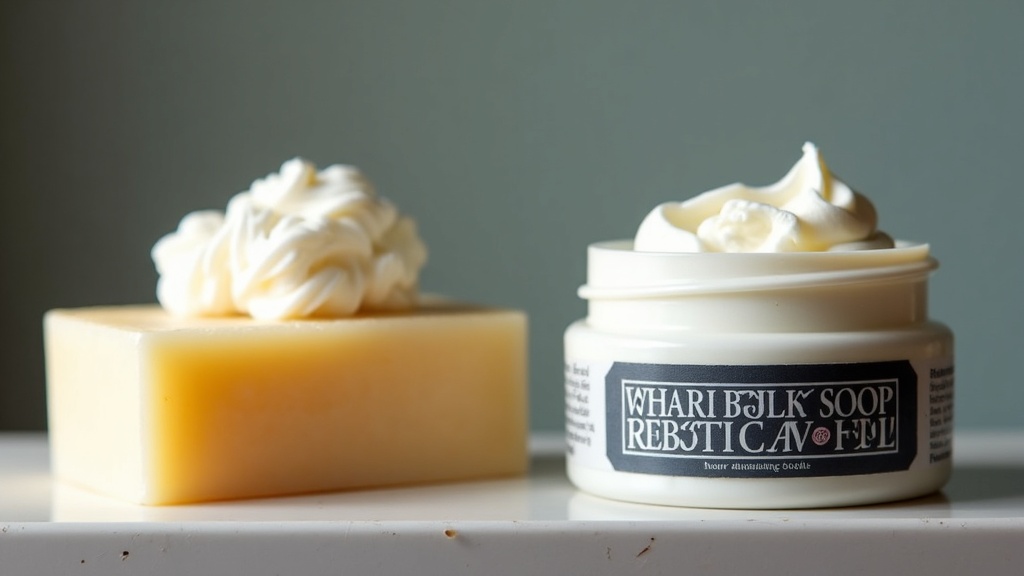
A soft soap or cream can be easier to portion than a hard puck. That can solve underloading without changing your water. However, many shaving creams still contain soap and remain affected by hardness. “Cream” is a consistency description, not a promise of immunity.
| Choice | Potential advantage | What to watch |
|---|---|---|
| Inexpensive hard shaving soap | Good value when adequately loaded | A sparse load can make it seem worse than it is |
| Premium artisan soap | May offer excellent slickness and easier hydration | Price and rich ingredients do not prove mineral tolerance |
| Soft soap or shaving cream | Easier to measure and work into the brush | Can still struggle with hard water |
| Existing soap with distilled water | Tests the water variable directly | Requires a separate supply for brush wetting and lather building |
My buying rule is straightforward: pay more when a sample gives a consistently easier, more comfortable shave at your sink. A beautiful tub that needs twice the fuss has not earned its place merely by costing more.
3. Run a distilled-water comparison before shopping
You need your current soap, a clean brush, a clean bowl, and plain distilled water. A bottle from the local grocery store is sufficient. Spring water can contain plenty of minerals, so it is a poor substitute for this experiment.
- Make a tap-water batch. Use your normal soap quantity and note how much water you add. Observe bubble size, spreadability, slickness between wet fingers, and whether a thin painted layer dries quickly.
- Clean and reset. Rinse the bowl and brush thoroughly. Give them a final distilled-water rinse and gently remove excess water so the second batch is not carrying a brushful of tap water.
- Repeat with distilled water. Keep the soap amount, water temperature, and mixing time as similar as practical. Use distilled water for both wetting the brush and building the lather.
- Compare, then tune. First compare equivalent batches. Then add small amounts of water to each to see how easily each reaches a usable consistency.
For soft soap, two equal measured portions make this easier. With a hard puck, loading for the same time is only an approximation: brush dampness and puck condition affect how much soap comes off. Repeat the comparison if the difference is slight.
A clear improvement with distilled water strongly suggests hardness is contributing. If both batches struggle, examine loading and hydration before blaming the formula. If both look good but the shave still drags, blade condition, angle, pressure, and beard preparation deserve attention too. Bowl volume alone does not establish shaving performance.
4. Build better lather with the soap you own
Start with enough soap
Begin with a thoroughly wetted brush, then shake or squeeze out excess water gently. The knot should be damp rather than dripping. Load until the tips carry a visible creamy paste. A few airy bubbles around the puck are not evidence that you have picked up enough product.
Thirty to sixty seconds can be a reasonable starting window for a hard puck, but use appearance rather than a stopwatch as the final judge. A soft soap needs a different approach: scoop a modest portion into the bowl and work it there. Change one variable per attempt so you can tell what helped.
Add water in small steps
Work the loaded brush in the bowl or on your wet beard, adding a few drops at a time. Thick paste needs water; thin froth may need more soap. Do not keep flooding an underloaded brush and expect longer whipping to repair the ratio.
Look for a cohesive, supple lather that spreads easily and retains moisture through a pass. Gloss can be helpful, but some excellent formulas look less shiny than others. The useful test is whether the blade glides comfortably over freshly lathered skin. Reapply lather before another pass rather than repeatedly scraping a cleared area.
A simple synthetic shaving brush can make repeatable testing convenient because it wets quickly and needs no prolonged presoak. An existing boar or badger brush is perfectly usable; avoid buying a new brush just to avoid adjusting your load.
If distilled water won the comparison decisively, reserve a small mugful for lather making. You can still rinse the razor under the tap. Keep that rinse water out of your lather bowl, and remember that tap-water rinsing can still leave deposits on the razor afterward.
5. Remove residue without sacrificing the razor’s finish
Hard-water residue matters beyond appearances. Accumulation around a guard, beneath a cap, or inside an opening mechanism makes inspection and cleaning harder. A white film may contain soap scum, mineral scale, or both. It is not automatically corrosion, and scrubbing until everything shines is a poor restoration strategy.
My workshop rule is to preserve sound plating before chasing perfect brightness. Abrasive polish removes material; it cannot replace missing nickel or gold. Yellow metal showing through worn nickel may be exposed brass, and polishing harder only enlarges the problem.
For routine care of a sound metal safety razor, remove the blade carefully, then open or separate only the parts designed for user access. Use lukewarm water and a little mild dishwashing liquid. A dedicated extra-soft nylon toothbrush helps lift residue from intact metal surfaces without the aggression of a wire brush. Rinse thoroughly, pat accessible bladeless surfaces dry, and allow concealed areas to air-dry before storage.
Rockwell’s care guidance recommends dish-soap cleaning and notes staining associated with leaving a blade in a wet razor. That is useful maintenance advice, but instructions for a modern razor should not automatically be applied to an unidentified antique finish.
Avoid routine vinegar soaks, bathroom descalers, abrasive powders, and metal brushes on vintage pieces. Acids can attack exposed base metal; abrasives can thin plating and erase painted markings. Old gold finishes may also retain protective lacquer. Razor Emporium’s finish guidance distinguishes nickel maintenance from the special care needed for gold and identifies lacquer on many vintage gold models.
When gentle washing leaves a stubborn deposit on an heirloom, identify the finish before escalating. Do not force a seized adjustment knob or dismantle a crimped handle. These instructions concern safety razors; a straight razor’s carbon-steel blade, pivot, and scales require different handling and should not be immersed as a unit.
6. Keep cleaning and disinfection separate
Removing shaving residue does not establish that a secondhand razor has been disinfected. Equally, a disinfectant bath is not a substitute for removing old soap and dirt first. A polished surface tells you little about sanitation.
For a newly acquired used razor, discard the old blade safely, inspect the razor, and clean it before selecting a disinfectant compatible with its materials. Follow that product’s current label for dilution, full wet contact time, rinsing, and drying. The BARBICIDE concentrate label, for example, requires prior cleaning and specifies a timed treatment for compatible nonporous barber tools. That does not establish compatibility with every antique coating or handle.
My preference with an uncertain collectible is to get material-specific advice before chemical treatment. Stronger mixtures and overnight soaking are not careful substitutes for correct instructions. An ultrasonic cleaner is a cleaning tool, not proof of sterilization. Ordinary daily care of your own razor and preparing an unknown secondhand razor for use are different jobs.
7. Decide whether an upgrade earns its cost
Once technique and water are understood, compare a sample of the prospective soap against your current one over several shaves. Keep the razor, blade type, brush, and water source consistent. Record ease of loading, water needed, glide, drying during a pass, and cleanup. A premium soap earns its price when those improvements matter to you.
Compare cost per satisfactory shave rather than tub price alone. A concentrated puck and a softer product may provide different numbers of uses at the same weight. Conversely, repeatedly overloading an inexpensive soap can erode its apparent saving. Buy the formula that works reliably, then pay extra for fragrance or presentation only if you value them.
Frequently asked questions
Is tallow soap better than vegan soap in hard water?
Not automatically. Both can contain soap components that react with hardness minerals. The complete formula and the amount loaded matter more than the tallow-versus-vegan label. Test a sample with your water.
Will a filter pitcher fix shaving-soap lather?
Only if its cartridge actually reduces hardness. A filter intended chiefly for taste or chlorine is not necessarily a water softener. Check its specifications, or use distilled water for a clearer comparison.
Should I add vinegar to the shaving bowl?
No. Acid changes soap chemistry and can undermine lather. It also introduces an unnecessary variable near vintage metal finishes. Use distilled water instead of improvising a chemical correction.
Does more foam mean better protection?
No. A large mound can be mostly air. Aim for a moist, cohesive layer with dependable glide. Before buying a dearer soap, give your current one enough product, controlled hydration, and one fair trial with distilled water.
Tradeoffs, uncertainty & affiliate disclosure
A closer shave can require more passes and may reduce comfort. Product feel varies with razor, blade, lather, angle, pressure, beard growth, and personal preference. ClassicBlade does not imply that every mentioned item was purchased, used, measured, or independently tested.
Some links may be affiliate links. ClassicBlade may earn a commission at no added cost to you; commercial links do not stand in for evidence.

Leave a Comment