
The quick take
Verdict, audience & limits
Vintage vs Modern Safety Razors: Is Old Hardware Actually Better?
I’ve spent 23 years testing over 300 safety razors, and here’s the truth: vintage razors aren’t inherently better than modern […]
Who this is for
Readers deciding whether this shaving topic, method, or product category fits their routine and preferences.
What this cannot promise
A universal result, irritation-free shave, medical outcome, or firsthand product test unless that specific use is explicitly documented.
Specifications & source boundary
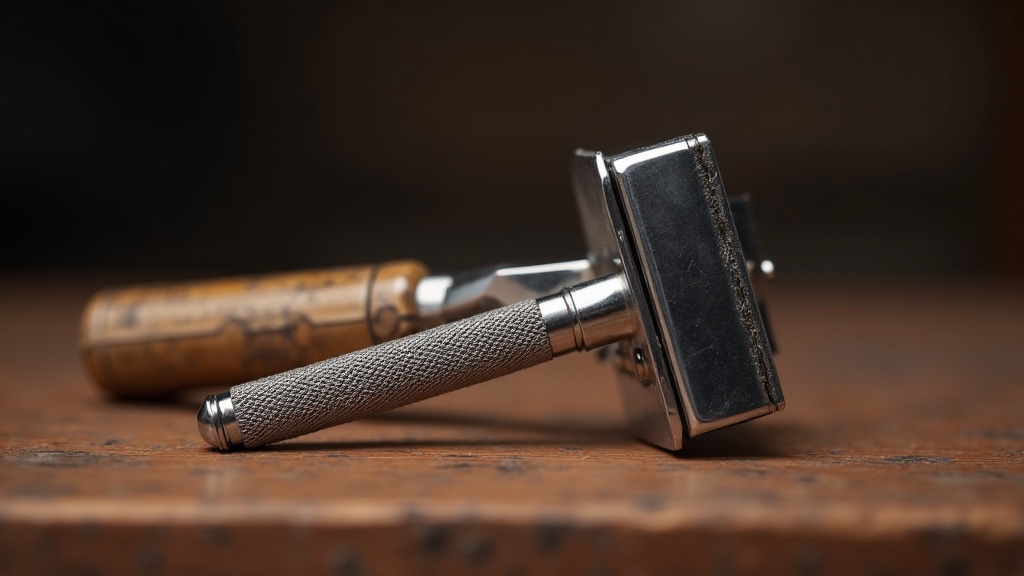
Model dimensions, materials, blade compatibility, and loading instructions should be checked against the maker’s documentation for the exact product and version. Manufacturer specifications are not independent measurements, and a photograph is not evidence of a product test.
How to read the evidence
Applies only where a specific razor, blade, or product and its conditions are explicitly identified.
Maker-supplied details should be checked against the exact model, market, and version.
A cautiously summarized pattern across identified sources, with disagreement acknowledged.
Background or explanatory framing, not a testing credential or objective measurement.
A subjective choice about feel, cost, convenience, or ritual—not a universal recommendation.
Technique variables
Change one thing. Pay attention.
Lather & preparation
Soften the beard with water, build a comfortably slick lather, and reapply before another pass.
Angle & pressure
Use light pressure and a shallow, familiar angle appropriate to the razor. Do not press harder to compensate for tugging.
Direction & passes
Begin with the grain, use fewer deliberate passes, and let comfort matter more than chasing perfect closeness.
Blade handling
Follow loading instructions, hold only unsharpened sides, and keep cutting edges away from fingers.
Use light pressure, fewer deliberate passes, and stop for pain or persistent irritation. Keep unused blades dry, secure, and away from children and pets. Place used blades in a closed puncture-resistant container and follow local disposal guidance. This is general grooming guidance, not medical advice.
I’ve spent 23 years testing over 300 safety razors, and here’s the truth: vintage razors aren’t inherently better than modern ones, but the best vintage pieces often outperform mid-range modern options because of superior brass construction and tighter tolerances. The real question isn’t which era wins—it’s which specific razor matches your face, beard type, and technique.
My journey started with my grandfather’s 1959 Gillette Fatboy. That adjustable razor taught me that manufacturing quality from the mid-20th century set a standard that many modern budget razors still can’t match. But I’ve also used modern razors that blow vintage options out of the water. Let’s break down what actually matters.
Build Quality: Where Vintage Often Wins
The vintage safety razors from the 1940s-1970s golden era were built during a time when planned obsolescence wasn’t the business model. Gillette, Schick, and other manufacturers designed razors to last decades because that’s what the market expected.
My 1960s Gillette Slim Adjustable still has the same smooth adjustment mechanism it had when Kennedy was president. The brass core under the plating means even if the chrome wears through, the razor remains structurally sound. Compare that to a modern zinc alloy head that can crack if you drop it once.
Modern premium razors—think brands like Karve or Wolfman—match or exceed vintage build quality. They’re machined from stainless steel or solid brass with CNC precision. But these cost $150-$300. A vintage Gillette Super Speed in good condition? You can find one for $20-$40 on Amazon or eBay.
The Material Reality
Vintage razors used brass cores with chrome, nickel, or gold plating. Modern budget razors ($15-$40 range) typically use:
- Zamak (zinc alloy): Lightweight, cheap to manufacture, prone to cracking and corrosion
- Pot metal: Various low-grade alloy combinations, inconsistent quality
- Plated brass: Better, but often thinner than vintage equivalents
Modern premium razors use stainless steel (304 or 316L grade) or solid machined brass. These materials are objectively superior to vintage brass for longevity and corrosion resistance—but you’re paying for it.
Shave Performance: It’s Complicated
Here’s where the vintage vs. modern debate gets interesting. After testing hundreds of razors on my own face, I can tell you that shave quality depends on blade gap, exposure, and head geometry more than the manufacturing date.
Some of my smoothest, most efficient shaves come from:
- Vintage: 1940s Gillette Aristocrat, 1960s Gillette Slim (setting 5-6)
- Modern: Karve Christopher Bradley (C plate), Henson AL13 Medium
And some of my worst shaves have come from both vintage duds (1970s disposable-era Gillette designs) and modern garbage (cheap Amazon no-name razors with aggressive gaps and zero quality control).
Vintage Safety Razor Performance Factors
Vintage razors were designed during the blade standardization era, so they work perfectly with modern double-edge blades. The Gillette adjustables (Fatboy, Slim, Super Adjustable) remain unmatched for versatility—you get nine different aggression settings in one razor.
But vintage razors also show their age in blade alignment. After 50-70 years, some three-piece designs develop play in the threading. The center post might not sit perfectly perpendicular, causing uneven blade exposure. I’ve learned to check blade alignment carefully on any vintage razor before the first shave.
Vintage vs Modern Safety Razors: Head-to-Head Comparison
| Factor | Vintage Safety Razors | Modern Safety Razors |
|---|---|---|
| Build Quality (Budget) | Brass core, chrome plate—solid and durable | Often zamak/zinc alloy—lighter, less durable |
| Build Quality (Premium) | Brass with quality plating, excellent for the era | Stainless steel or machined brass—superior longevity |
| Price (Good Condition) | $20-$60 for quality pieces | $30-$80 budget; $150-$300 premium |
| Adjustability | Gillette adjustables are still the gold standard | Rare; most use plate swapping instead |
| Blade Alignment | Can develop play after decades of use | Tight tolerances when new (quality brands) |
| Design Variety | Limited to era designs (mostly mild to medium) | Huge variety: mild to ultra-aggressive, slant bars, open comb, etc. |
| Availability | Hunting on eBay, estate sales, antique stores | Instant purchase online, consistent stock |
| Warranty/Support | None—decades old | Manufacturer warranty, customer service |
What Modern Razors Do Better
Modern razor manufacturers have the advantage of studying 70+ years of safety razor evolution. They know what worked and what didn’t. Here’s where contemporary designs excel:
Material Science Advances
Stainless steel razors don’t pit, tarnish, or corrode like plated brass. My Karve razor will outlast me without any maintenance beyond rinsing and drying. Vintage razors require periodic polishing and careful storage to prevent plate deterioration.
Precision Manufacturing
CNC machining allows modern makers to hold tolerances that 1960s manufacturing couldn’t match. The result? More consistent blade exposure, better alignment, and predictable shave characteristics across every unit produced.
When I buy a modern razor from a reputable maker, I know exactly what I’m getting. When I buy vintage, even from the same model line, there can be variation in how the razor performs after decades of use and wear.
Design Innovation
Modern razors explore geometries that vintage manufacturers never considered. Slant bar designs, open comb configurations, and ultra-efficient head geometries offer options for shavers with tough beards or sensitive skin that vintage catalogs never addressed.
The Henson AL13, machined from aerospace aluminum, uses a design that makes blade alignment and exposure virtually foolproof. It’s a great example of modern engineering solving old problems.
Why I Still Reach for Vintage
Despite owning several premium modern razors, I find myself using vintage pieces 60% of the time. Here’s why:
The adjustability factor: Nothing modern matches the convenience of a Gillette Fatboy or Slim. Nine settings from mild to aggressive, adjusted mid-shave if needed. Modern “adjustable” razors either cost $400+ or require unscrewing the handle and swapping plates between passes.
Value proposition: My 1961 Gillette Slim cost me $32 on eBay. It delivers world-class shaves that rival razors costing 10x more. For someone starting wet shaving, that value is hard to ignore.
The feel in hand: There’s something about the weight and balance of vintage brass that modern stainless steel doesn’t quite replicate. It’s subjective, but after 23 years, I know what feels right to me.
Which Should You Choose?
If you’re deciding between vintage and modern, here’s my honest recommendation based on your situation:
Choose vintage if:
- You want the best value for performance (a $30 vintage Gillette can shave like a $100+ modern razor)
- You appreciate the adjustability of Gillette’s twist-dial designs
- You don’t mind the hunting process and evaluating condition
- You’re willing to learn basic cleaning and maintenance
Choose modern if:
- You want brand-new condition with warranty support
- You prefer stainless steel’s no-maintenance durability
- You want specific aggressive or specialty geometries (slants, open combs)
- You’d rather click “buy now” than hunt estate sales
My actual recommendation? Get both. Start with a vintage Gillette adjustable (Slim, Fatboy, or Super Adjustable) from Amazon or eBay in “excellent” condition. Learn what aggression setting works for your face. Then if you want to upgrade, invest in a premium modern razor knowing exactly what characteristics you’re looking for.
Buying Vintage Safety Razors: What to Check
If you go the vintage route, inspect carefully before buying:
- Blade alignment: Load a blade and check that exposure is even on both sides
- Plating condition: Minor wear is fine; deep pitting or brass showing through means corrosion
- Mechanical function: Doors should open/close smoothly, adjustments should click firmly
- Threading condition: Check for stripped threads or cross-threading damage
I’ve bought dozens of vintage razors online. Stick to sellers with detailed photos and “excellent” or “very good” condition ratings. A $35 excellent-condition Slim beats a $15 “fair” condition piece that needs restoration work.
Frequently Asked Questions
Are vintage safety razors better quality than modern ones?
Vintage razors from the 1940s-1970s used solid brass construction that beats modern budget razors (under $40), but premium modern razors ($150+) made from stainless steel or machined brass exceed vintage quality. The best vintage pieces offer exceptional value—delivering performance equal to modern razors at a fraction of the price.
What is the best vintage safety razor for beginners?
The Gillette Super Speed from the 1950s-1960s is ideal for beginners—it’s a mild, forgiving three-piece design that’s nearly indestructible. For someone who wants adjustability, the Gillette Slim Adjustable offers nine settings so you can find your perfect aggression level. Both are available on Amazon and eBay for $25-$50 in good condition.
Do vintage safety razors work with modern blades?
Yes, absolutely. Modern double-edge blades use the same standardized dimensions established in the early 20th century. Any vintage safety razor accepts today’s blades from Feather, Astra, Derby, or any other brand. The blade standardization is one reason vintage razors remain practical daily shavers 50-70 years later.
How long do vintage safety razors last?
A quality vintage safety razor in good condition can last indefinitely with basic care. I regularly use razors from the 1940s-1960s that work as well as the day they were made. The brass construction resists damage, and as long as the plating remains intact and moving parts function smoothly, these razors will outlast you. Avoid pieces with heavy pitting or damaged threads.
Why are vintage safety razors so cheap compared to modern premium razors?
Vintage safety razors are cheap because millions were manufactured, creating huge supply in the secondhand market. A Gillette Slim Adjustable cost about $2 in 1960 ($20 adjusted for inflation)—it was a mass-market product, not a luxury item. Modern premium razors are small-batch artisan products with CNC machining and stainless steel construction, which drives up costs. You’re paying for different things: vintage offers proven designs and value, while modern premium offers materials and manufacturing that exceed vintage specs.
Tradeoffs, uncertainty & affiliate disclosure
A closer shave can require more passes and may reduce comfort. Product feel varies with razor, blade, lather, angle, pressure, beard growth, and personal preference. ClassicBlade does not imply that every mentioned item was purchased, used, measured, or independently tested.
Some links may be affiliate links. ClassicBlade may earn a commission at no added cost to you; commercial links do not stand in for evidence.



Leave a Comment