
The quick take
Verdict, audience & limits
Best Shaving Brushes of 2026: Badger, Boar and Synthetic
After 20+ years of wet shaving, Thomas Hargrove breaks down the best shaving brushes of 2026 — badger, boar, and synthetic — with picks for every budget from $14 to luxury.
Who this is for
Readers deciding whether this shaving topic, method, or product category fits their routine and preferences.
What this cannot promise
A universal result, irritation-free shave, medical outcome, or firsthand product test unless that specific use is explicitly documented.
Specifications & source boundary
Model dimensions, materials, blade compatibility, and loading instructions should be checked against the maker’s documentation for the exact product and version. Manufacturer specifications are not independent measurements, and a photograph is not evidence of a product test.
How to read the evidence
Applies only where a specific razor, blade, or product and its conditions are explicitly identified.
Maker-supplied details should be checked against the exact model, market, and version.
A cautiously summarized pattern across identified sources, with disagreement acknowledged.
Background or explanatory framing, not a testing credential or objective measurement.
A subjective choice about feel, cost, convenience, or ritual—not a universal recommendation.
Technique variables
Change one thing. Pay attention.
Lather & preparation
Soften the beard with water, build a comfortably slick lather, and reapply before another pass.
Angle & pressure
Use light pressure and a shallow, familiar angle appropriate to the razor. Do not press harder to compensate for tugging.
Direction & passes
Begin with the grain, use fewer deliberate passes, and let comfort matter more than chasing perfect closeness.
Blade handling
Follow loading instructions, hold only unsharpened sides, and keep cutting edges away from fingers.
Use light pressure, fewer deliberate passes, and stop for pain or persistent irritation. Keep unused blades dry, secure, and away from children and pets. Place used blades in a closed puncture-resistant container and follow local disposal guidance. This is general grooming guidance, not medical advice.
Disclosure: This post contains affiliate links. If you purchase through our links, we may earn a small commission at no extra cost to you.
Brush Buyer Guide
Best shaving brushes of 2026: badger, boar, or synthetic?
A good shaving brush changes the whole shave. It builds better lather, lifts the beard more cleanly, and makes soap feel like an upgrade instead of a chore. The mistake most people make is buying by tradition alone — badger because it sounds premium, boar because it is cheap, or synthetic because it is convenient. The better move is matching the brush to how you actually shave.
Quick Answer
| Best for most people | a good synthetic brush |
| Best if you want classic luxury | badger |
| Best budget traditional option | boar |
| Best for travel or easy drying | synthetic |
What kind of brush should you buy first?
| If you care most about… | Start with… | Why |
|---|---|---|
| Easy maintenance and modern value | Synthetic | The safest recommendation for most people right now. |
| Traditional feel and luxury ritual | Badger | Still the classic prestige choice if you know why you want it. |
| Low-cost backbone for hard soaps | Boar | Best traditional budget route if you can tolerate break-in time. |
If the rest of your setup is still forming, compare this page with Merkur razors, the Parker 99R, and shaving creams for safety razors.
If you only want one plain recommendation: buy a quality synthetic unless you already know you want the feel and ritual of natural hair. Modern synthetics are that good now. They are easy, soft, fast-drying, and hard to mess up.
Why a shaving brush still matters
A brush does three useful things that canned foam never really replaces:
- it hydrates soap or cream properly
- it helps lift and separate beard hair
- it gives you more control over how wet, dense, and slick your lather actually is
That matters whether you are shaving with a mild beginner razor like a Merkur or a butterfly design like the Parker 99R. Good prep makes every razor shave better.
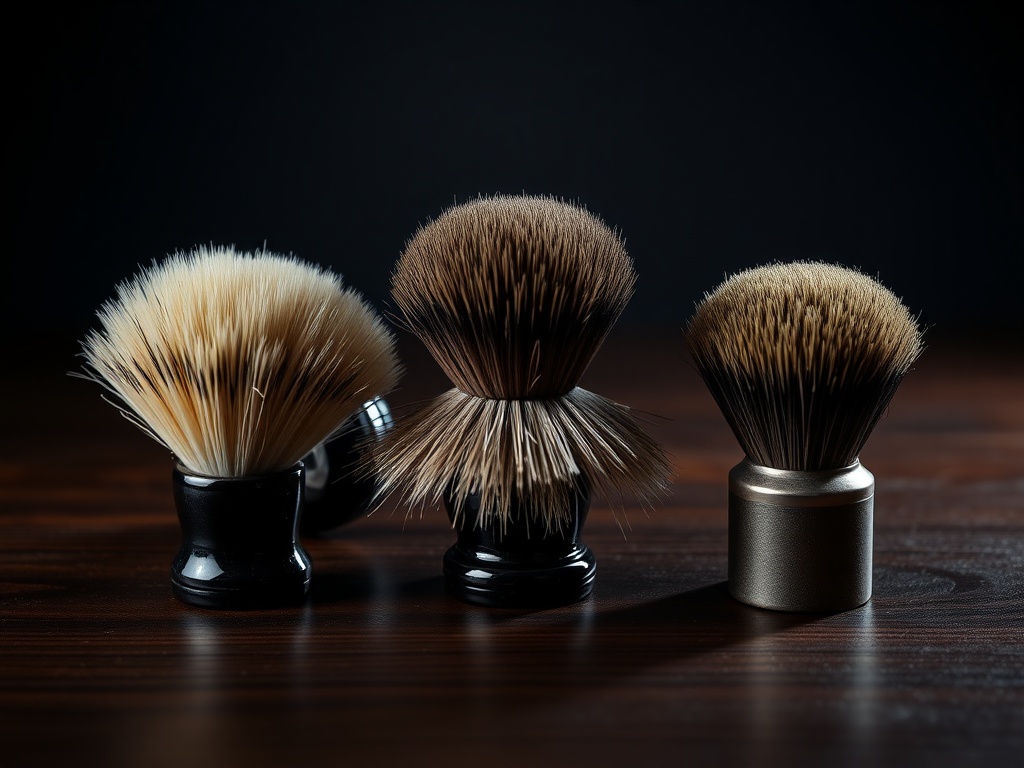
Badger vs boar vs synthetic: the real differences
Badger
Best for: people who want warmth, softness, and the classic luxury feel.
Still the traditional prestige pick, but not automatically the smartest buy for everyone.
Boar
Best for: budget-conscious shavers who do not mind break-in time.
Excellent backbone and soap loading, but it takes patience to soften properly.
Synthetic
Best for: most modern buyers.
Fast drying, easy to maintain, soft from day one, and much better than old synthetics used to be.
Best shaving brushes by type
Best overall: a high-quality synthetic brush
If I were recommending one brush type to the average modern wet shaver, it would be synthetic. The upside is just too practical: no break-in period, fast drying, soft face feel, and excellent lather performance. You lose a little of the traditional romance, but you gain simplicity.
Best badger choice: mid-grade badger with real backbone
Badger still has a place if you want warmer lather, a more traditional feel, and a brush that makes the shave feel like more of an event. I usually think mid-grade badger is the smarter buy than blindly paying for top-end silvertip just because it sounds elite.
Best boar choice: value-first traditional workhorse
Boar is still the best answer if you want the old-school feel without spending much. It loads hard soaps beautifully and often has more scrub than people expect. The catch is simple: it needs time to break in, and some people never have the patience for that.
Which shaving brush should you actually buy?
| If you want… | Start with… | Why |
|---|---|---|
| The easiest first brush | Synthetic | No break-in, easy drying, consistently good lather. |
| The most classic luxury feel | Badger | Warm, soft, traditional face feel. |
| The best low-cost traditional brush | Boar | Great soap loading and strong value once broken in. |
| A travel-friendly option | Synthetic | Dries faster and travels more easily. |
Common shaving-brush buying mistakes
- Buying by prestige label alone: “badger” is not automatically better than a strong modern synthetic.
- Ignoring dry time: a great brush on paper can become annoying fast in a humid bathroom or travel kit.
- Overbuying knot size: bigger is not automatically more luxurious if it makes lathering clumsy.
- Treating the brush as decorative: prep quality changes how every razor and blade feels on your face.
What most brush guides get wrong
A lot of shaving-brush roundups still act like badger automatically wins because that used to be the prestige standard. That is outdated. A really good synthetic is often the better real-world tool now. If somebody is buying their first serious brush in 2026, I would rather they get a solid synthetic and enjoy the shave than buy a mediocre badger because tradition told them to.
What to look for besides hair type
- Knot size: larger is not always better; many people do well in the 22–26mm range.
- Backbone: how much resistance the brush has when you press it into the face.
- Handle shape: more important than people think, especially with wet hands.
- Dry time: matters more if you travel or keep the brush in a humid bathroom.
If you are still building the rest of your setup, this page pairs well with my guides on the best shaving creams for safety razors, which Merkur safety razor to choose, the Parker 99R review, and how to lather shaving soap.
Related reads
Bottom line
The best shaving brush for most people in 2026 is a good synthetic. Badger still wins on tradition and luxury feel. Boar still wins on low-cost backbone and hard-soap performance. But if you want the easiest recommendation with the fewest tradeoffs, synthetic is the modern safe bet.
Tradeoffs, uncertainty & affiliate disclosure
A closer shave can require more passes and may reduce comfort. Product feel varies with razor, blade, lather, angle, pressure, beard growth, and personal preference. ClassicBlade does not imply that every mentioned item was purchased, used, measured, or independently tested.
Some links may be affiliate links. ClassicBlade may earn a commission at no added cost to you; commercial links do not stand in for evidence.
Leave a Comment