

The quick take
Verdict, audience & limits
Can You Bring Shaving Cream on a Plane?
My grandfather’s razor started my interest in wet shaving, and 23 years and more than 300 razors later, I still […]
Who this is for
Readers deciding whether this shaving topic, method, or product category fits their routine and preferences.
What this cannot promise
A universal result, irritation-free shave, medical outcome, or firsthand product test unless that specific use is explicitly documented.
Specifications & source boundary
Model dimensions, materials, blade compatibility, and loading instructions should be checked against the maker’s documentation for the exact product and version. Manufacturer specifications are not independent measurements, and a photograph is not evidence of a product test.
How to read the evidence
Applies only where a specific razor, blade, or product and its conditions are explicitly identified.
Maker-supplied details should be checked against the exact model, market, and version.
A cautiously summarized pattern across identified sources, with disagreement acknowledged.
Background or explanatory framing, not a testing credential or objective measurement.
A subjective choice about feel, cost, convenience, or ritual—not a universal recommendation.
Technique variables
Change one thing. Pay attention.
Lather & preparation
Soften the beard with water, build a comfortably slick lather, and reapply before another pass.
Angle & pressure
Use light pressure and a shallow, familiar angle appropriate to the razor. Do not press harder to compensate for tugging.
Direction & passes
Begin with the grain, use fewer deliberate passes, and let comfort matter more than chasing perfect closeness.
Blade handling
Follow loading instructions, hold only unsharpened sides, and keep cutting edges away from fingers.
Use light pressure, fewer deliberate passes, and stop for pain or persistent irritation. Keep unused blades dry, secure, and away from children and pets. Place used blades in a closed puncture-resistant container and follow local disposal guidance. This is general grooming guidance, not medical advice.
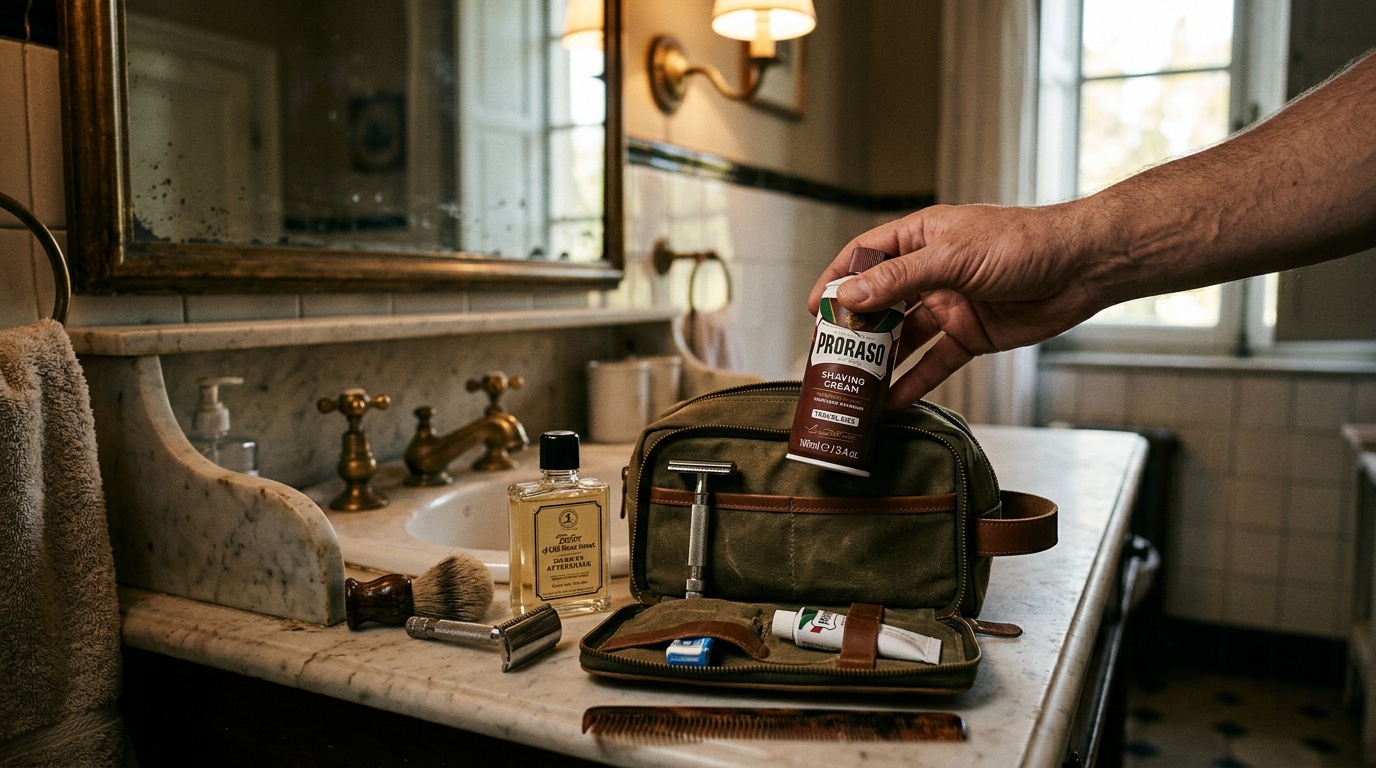
My grandfather’s razor started my interest in wet shaving, and 23 years and more than 300 razors later, I still pack around one simple principle: bring what you need, and protect what you cannot replace. Can you bring shaving cream on a plane? Yes. For U.S. carry-on screening, use a container no larger than 3.4 ounces (100 mL), packed inside your one quart-size liquids bag. Larger containers belong in checked luggage, with additional limits for aerosols.
The cream is usually the easy part. The loose blade tucked into a travel case, the oversized half-empty can, and the damp vintage razor zipped away after a rushed shave deserve closer attention. Here is how to get the whole kit ready without sacrificing a decent shave or an old tool?s finish.
As an Amazon Associate, I earn from qualifying purchases.
Shaving cream in carry-on luggage: check the container first
TSA?s liquids rule covers creams, gels, pastes, and aerosols. A tube of traditional shaving cream and a can of foam both count. Each container must meet the size limit, and all your qualifying toiletries must fit together in one clear, quart-size, zip-top bag per passenger. That includes toothpaste and aftershave. See the TSA?s official packing guidance.
A partly empty large container does not become a travel-size container. A 150 mL tube with only a few shaves left still exceeds the carry-on limit. Check the marked size before packing, rather than guessing by how light the tube feels. For the least ambiguity, choose packaging clearly marked 100 mL or smaller; weight ounces and fluid ounces are different measurements.
For ordinary non-aerosol cream, a clean, compatible travel pot is useful. Transfer it with a clean spoon, label it, and keep the threads free of cream so the lid seats properly. Choose a pot with a clearly stated capacity below the limit. Leave a little room at the top and test it on its side at home. A jar that leaks in your bathroom will not improve in a suitcase.
Do not try to decant pressurized shaving foam or gel into a travel jar. Buy a smaller original can or take a tube instead. Keep the liquids bag accessible, and follow the screening instructions at your checkpoint.
Checked luggage: full-size aerosol cans have limits
A normal full-size shaving-foam can can travel in checked baggage, provided it meets the applicable limits. Under the FAA?s medicinal and toiletry article rules, each covered container must not exceed 0.5 kg (18 ounces) or 500 mL (17 fluid ounces). The combined allowance per person is 2 kg (70 ounces) or 2 L (68 fluid ounces) across the articles covered by that exception.
That combined allowance includes other qualifying toiletries; it is not a separate allowance for each product. The aerosol button or nozzle must also be protected against accidental release with its cap or another suitable method. Check the airline?s dangerous-goods guidance, particularly for international travel.
| Shaving product | Carry-on packing | Checked packing |
|---|---|---|
| Cream in a tube or pot | 100 mL or smaller; inside the liquids bag | Larger sizes generally permitted; secure the lid |
| Aerosol foam or gel | 100 mL or smaller; liquids bag; protected nozzle | FAA individual and combined limits apply; protected nozzle |
| Firm, solid shaving soap | Pack as a solid; keep it free of pooled water | Use a protective container |
| Soft, spreadable shaving soap | Conservatively pack as a cream within the liquids allowance | Seal the tub against leakage |
Keep an aerosol in its original can with a sound cap. A separate bag can contain a mess, but it does not substitute for protecting the actuator. Do not pack a badly dented, leaking, or corroded can. Replace it before the trip.
Cream, foam, or shaving soap: what earns its space?
My first travel judgment is to pack a familiar cream in a small tube for a short trip. A hotel sink is a poor place to discover that a new product needs twice as much water or leaves your face feeling tight. Test the travel portion over several shaves at home; the amount you use matters more than an optimistic number printed on a package.
A tube keeps the routine simple
A screw-cap tube takes little preparation and keeps fingers out of the remaining product. A brushless cream can also eliminate the brush, provided you already like how it shaves. If you use a lathering cream, work water in gradually. Hotel water can behave differently from your water at home, and a dense-looking lather can still be too dry to shave comfortably.
Foam is perfectly serviceable when convenience matters. There is no craftsmanship prize for carrying a heavy bowl through an airport. The useful question is whether your chosen product gives enough glide and rinses out of your razor without an elaborate routine.
A genuinely solid soap saves liquids-bag space
A dry, firm shaving puck or stick is a solid toiletry. The distinction gets less clear with soft soaps that scoop and spread like cream. Treat those conservatively as creams, regardless of whether the maker calls them ?soap.? TSA?s item guidance is the place to check product categories; the screening officer has the final decision.
Solid soap still needs sensible handling. Drain it after use and let its surface dry before closing the container. A screw-top tin containing wet soap and standing water gives up much of the practical advantage. If bringing a brush, choose one you can rinse easily and give it time to dry before packing.
The safety razor and its blades need a separate plan
TSA allows a safety razor through the checkpoint with the blade removed before screening. Loose double-edge blades belong in checked luggage, securely wrapped or enclosed to protect anyone inspecting the bag. A sealed retail blade pack does not make those blades carry-on eligible. Disposable and cartridge razors are carry-on options; straight razors belong in checked baggage. These distinctions appear in TSA?s razor listings.
Check every pocket of the shaving case at home, including the compartment where you keep emergency blades. For a carry-on-only trip with a safety razor, arrange to buy compatible blades at your destination. Confirm availability before leaving, especially if your razor takes a less common format. Arriving with a beautiful handle and no usable blade is an avoidable nuisance.
My second judgment call is to leave an irreplaceable family razor at home. A sound, replaceable daily shaver is easier to travel with. Sentimental value makes lost luggage and hurried inspection far more expensive than the price of the tool.
Keep a bladeless three-piece razor?s parts together in a padded compartment, accessible for inspection. Protect the cap?s threaded post and keep metal pieces from rattling against one another. A padded safety razor travel case is worth considering if your existing wash bag provides no protection. Check the internal dimensions and lining; a hard shell alone does not stop movement inside.
For a fuller breakdown, see our guide to bringing razor blades on a plane. Check the rules for your return departure and any connecting checkpoint abroad, too; U.S. permission does not establish another country?s policy.
Clean the razor before travel without stripping its finish
Travel preparation should be maintenance, not an overnight restoration project. Remove the blade, rinse away lather, and gently clean accessible residue with warm water and mild detergent appropriate to the razor. MERKUR?s care advice supports mild dishwashing detergent and warns that acids attack razor and brush surfaces.
A dedicated extra-soft nylon toothbrush reaches knurling and the underside of a baseplate without the aggression of a wire brush. Use light pressure on intact finishes. If plating is lifting, stop scrubbing that area. Rinse thoroughly and pat dry with a clean, soft cloth.
My third workshop rule is that an old razor does not need to look freshly plated to be ready for a trip. Abrasive polish removes material, and repeated efforts to erase every dark mark can thin an already worn finish. A smooth patch of exposed brass is not something stronger detergent will repair. Neither is pitting.
Avoid improvised vinegar soaks, bleach baths, boiling, and bathroom descalers on an unidentified vintage razor. Materials, plating, lacquer, adhesives, and handle construction vary. What one solid metal part tolerates may damage another assembly. Never force a seized adjustment dial the evening before departure; take a working razor and investigate the mechanism properly later.
Cleaning and disinfection are different jobs
Removing soap and hair does not sterilize a razor. Equally, a quick splash of aftershave is not a validated disinfection process. For ordinary travel with your own maintained razor, concentrate on removing residue, drying it, and protecting it from contamination. Do not share the razor.
An unfamiliar secondhand razor needs a separate assessment before it joins your shaving kit. If disinfection is necessary, follow a suitable product?s label for the surface, dilution, and contact time, and establish compatibility with the razor first. Longer soaking is not automatically better. An antique finish should not be the test surface for a disinfectant chosen in haste.
Pack dry, then give everything air at the hotel
My fourth judgment call is to shave the evening before an early departure when practical. That gives the razor and brush time to dry. A last-minute wet shave followed by hours in a closed pouch creates the very storage conditions I try to avoid with old tools.
Moisture trapped around a blade, under a cap, or inside a case encourages corrosion. Stainless blades are not a reason to store an assembly wet. MERKUR likewise recommends drying shaving tools thoroughly before storage. An old leather case deserves particular care: keep wet metal and leaking cream out of it.
- Remove the blade and deal with it according to your baggage plan.
- Rinse the razor and dry accessible surfaces; allow crevices additional air time.
- Close the cream securely and protect any aerosol nozzle.
- Separate toiletries that could leak from the razor and its case.
- Protect the razor head from knocks and keep loose parts from rubbing.
- Unpack damp items promptly on arrival and let them finish drying.
If you must pack shortly after shaving, blot away as much water as possible and reopen the kit at your next opportunity. A damp towel wrapped around a razor is still damp storage. At the hotel, choose a stable spot away from the sink edge; a fall onto tile can bend a comb tooth or damage a threaded connection.
Frequently asked questions
Does shaving gel count as a liquid?
Yes. Gel and cream follow the carry-on liquids restrictions even when they are thick or come from a non-aerosol tube. Switching texture does not create extra space in your allowance.
Can I bring a half-empty full-size can?
Put it in checked baggage if it meets the aerosol requirements. Carry-on screening considers container size, so using most of the contents does not solve an oversized-can problem.
Will shaving cream explode during the flight?
Compliant toiletry aerosols are permitted for air travel. The practical preparation is an undamaged original can, a protected nozzle, and compliance with baggage limits. Keep it away from heat and follow its label?s storage directions.
Should I buy shaving cream after landing?
For a longer stay, that can be simpler than packing a large supply. Bring enough of a familiar product for your first shaves, then shop locally. If your skin dislikes substitutions, reserve room for your usual cream and reduce the less useful toiletries instead.
A good travel shave starts with a modest kit: familiar lather, a lawful blade plan, and a clean, dry razor protected from knocks. Get those details right before leaving home, and the hotel bathroom needs very little equipment.
Tradeoffs, uncertainty & affiliate disclosure
A closer shave can require more passes and may reduce comfort. Product feel varies with razor, blade, lather, angle, pressure, beard growth, and personal preference. ClassicBlade does not imply that every mentioned item was purchased, used, measured, or independently tested.
Some links may be affiliate links. ClassicBlade may earn a commission at no added cost to you; commercial links do not stand in for evidence.

Leave a Comment