
The quick take
Verdict, audience & limits
What Makes the Bearback Back Shaver Different From Other Folding Shavers?
I have learned the hard way that razor burn usually comes from bad pressure, bad prep, or the wrong blade […]
Who this is for
Readers deciding whether this shaving topic, method, or product category fits their routine and preferences.
What this cannot promise
A universal result, irritation-free shave, medical outcome, or firsthand product test unless that specific use is explicitly documented.
Specifications & source boundary
Model dimensions, materials, blade compatibility, and loading instructions should be checked against the maker’s documentation for the exact product and version. Manufacturer specifications are not independent measurements, and a photograph is not evidence of a product test.
How to read the evidence
Applies only where a specific razor, blade, or product and its conditions are explicitly identified.
Maker-supplied details should be checked against the exact model, market, and version.
A cautiously summarized pattern across identified sources, with disagreement acknowledged.
Background or explanatory framing, not a testing credential or objective measurement.
A subjective choice about feel, cost, convenience, or ritual—not a universal recommendation.
Technique variables
Change one thing. Pay attention.
Lather & preparation
Soften the beard with water, build a comfortably slick lather, and reapply before another pass.
Angle & pressure
Use light pressure and a shallow, familiar angle appropriate to the razor. Do not press harder to compensate for tugging.
Direction & passes
Begin with the grain, use fewer deliberate passes, and let comfort matter more than chasing perfect closeness.
Blade handling
Follow loading instructions, hold only unsharpened sides, and keep cutting edges away from fingers.
Use light pressure, fewer deliberate passes, and stop for pain or persistent irritation. Keep unused blades dry, secure, and away from children and pets. Place used blades in a closed puncture-resistant container and follow local disposal guidance. This is general grooming guidance, not medical advice.
I have learned the hard way that razor burn usually comes from bad pressure, bad prep, or the wrong blade match far more than some mystical flaw in the razor itself.
Folding back shavers all try to solve the same basic problem: helping you reach awkward areas without asking for help.
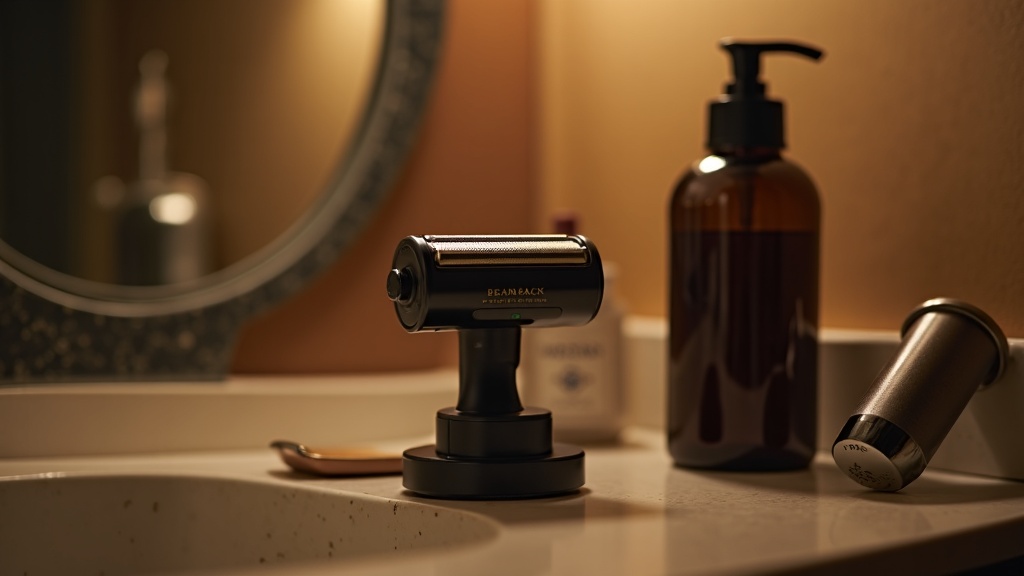
What separates one option from another is how well it balances reach, control, comfort, and convenience. The Bearback
Back Shaver stands out because it is designed less like a single-purpose grooming gadget and more like a flexible
body-care tool that can handle both hard-to-reach shaving and closer detail work.
While many folding shavers focus mainly on having a long handle, the Bearback puts more emphasis on how that handle
changes the shaving experience. Its extendable folding design, pivoting cartridge head, and compatibility with other
attachments give it a broader use case than many competing manual back shavers.
A Folding Handle That Prioritizes Reach and Control
One of the biggest differences is the handle format itself. The Bearback is built to extend for full back reach and
then fold down for shorter-range grooming. That matters because the problem with some folding shavers is not just
reaching your back, but controlling the razor once you get there. A long fixed handle may help with distance, but it
can feel clumsy when you want to clean up shoulders, chest, or stomach areas with more precision.
By switching between a longer configuration for the back and a shorter one for body grooming, the Bearback aims to
cover both situations with one tool. That makes it more versatile than folding shavers that are really optimized for
only one angle or one part of the body.
A Pivoting Head Instead of a Rigid Shave Angle
Another differentiator is the shaving head. Many manual body shavers use a fixed blade position, which can make it
harder to keep smooth contact across the curves of the shoulders, lower back, and sides. Bearback uses a pivoting
cartridge-style head, which is meant to follow the body’s contours more naturally.
In practical terms, that can mean a more even shave with less pressure. Instead of forcing the handle into an awkward
angle to keep the blade flat, the head does more of the adjustment for you. For users who care about reducing drag,
missed patches, or over-shaving the same area, that is a meaningful difference.
Built More Like a Familiar Razor Than a Specialty Blade
Some folding back shavers use unconventional blade layouts that work well for broad strokes but feel less familiar to
people used to standard cartridge razors. The Bearback leans into a more traditional razor experience with a
multi-blade cartridge approach. That can make the learning curve easier, especially for someone moving from a regular
handheld razor to a long-reach tool for the first time.
The advantage here is comfort and predictability. Users who want a smoother, closer finish may prefer that setup over
tools that prioritize speed but feel rougher or less refined on sensitive skin.
Wet or Dry Flexibility Adds Practical Value
A good back shaver needs to fit into real routines, not ideal ones. The Bearback is positioned as a tool that can be
used wet in the shower or dry when you need a quick cleanup. That kind of flexibility matters because not everyone
wants a full shower shave every time, and not every grooming session is planned in advance.
Compared with folding shavers that work best only under one condition, this gives the Bearback broader day-to-day
appeal. It suits users who want one device they can grab whether they are doing a complete grooming session or just
touching up visible areas before the gym, beach, or a night out.
More Than a Shaver: Part of a Larger Handle System
The Bearback also separates itself by treating the handle as part of a wider grooming and self-care system. Rather
than existing only as a razor, the same handle is designed to work with other snap-on attachments such as tools for
scratching, scrubbing, brushing, or applying lotion.
That may not matter to someone who only wants a dedicated shaving tool, but it does change the value proposition.
Other folding shavers are often one-task products. Bearback’s approach is closer to a reusable platform, which can be
attractive for buyers who prefer multipurpose products and want to reduce clutter in the bathroom.
Who Will Notice the Difference Most?
The Bearback will likely feel most different to users who want a balance of independence and refinement. If your main
concern is simply reaching your back, plenty of folding shavers can technically do that. But if you also care about
maneuverability, a smoother shave path, and using the same tool for other body areas, the Bearback has clearer
advantages.
It may be especially appealing for men who regularly groom more than just their back and do not want separate tools
for each step. The folding handle helps with reach, the shorter form improves close control, and the pivoting head
supports a more forgiving shave across uneven surfaces.
Final Take
What makes the Bearback Back Shaver different from other folding shavers is not just that it folds. It is the
combination of a long-reach handle, a shorter precision mode, a pivoting multi-blade head, wet-or-dry usability, and
a multi-attachment system built around the same handle. Together, those features make it feel more adaptable than many
basic folding back shavers that only solve the reach problem.
For shoppers comparing options, that is the key distinction. Bearback is aimed at people who want a back shaver that
behaves more like a complete grooming tool, not just a long razor with a hinge.
What I Fix First
- Too much pressure on the handle.
- A blade that is either too dull or too harsh for your skin.
- Rushing prep and shaving against the grain too early.
- Piling on too many touch-up passes over already irritated skin.
If you are trying to calm down irritation without buying junk, I would start by comparing double edge safety razors and adjustable safety razors because those are the kinds of practical fixes that usually matter more than chasing a new razor every time your skin gets angry.
Where I Would Start Shopping
For roundup-style posts, I think it is smarter to compare several razor lanes instead of pretending one head shape fits everybody. I would look at double edge safety razors, adjustable safety razors, mild safety razors, and aggressive safety razors so the reader sees several credible paths instead of one forced winner.
What Usually Causes Razor Burn in Real Life
Most razor burn problems are boring, which is exactly why they keep happening. People press too hard, keep shaving after the lather has broken down, or assume a more aggressive pass will somehow clean up the irritation created by the last pass. In my experience, that almost always makes the skin angrier.
I also think a lot of shavers blame the wrong thing. They blame the razor when the real problem is blade choice, rushed prep, or poor angle control. A mild razor with bad pressure can still tear you up. A sharper blade used lightly can sometimes be kinder than a duller blade that drags.
My Practical Fix Order
If I were troubleshooting this at the sink, I would fix pressure first, then blade pairing, then pass count, then post-shave products. That order matters because most people try to solve irritation by buying another balm while still shaving with the same sloppy technique that caused the problem in the first place.
That does not mean products are useless. It means they work best once the underlying shave mechanics stop punishing your skin every morning.
What I Tell New Safety Razor Shavers
The goal is not to scrape your face smooth in one heroic pass. The goal is to reduce beard gradually while keeping the skin calm enough that you can shave again tomorrow. Once you understand that, razor burn becomes much easier to prevent because you stop treating the shave like a race.
Small Changes That Usually Help Fast
If you want the shortest route to calmer skin, lighten your grip, shorten the stroke, and stop chasing tiny rough spots with repeated cleanup passes. That one habit change alone fixes a surprising amount of razor burn.
I would also give any new blade brand at least a few shaves before judging it, because the first bad shave is sometimes technique and not the blade itself. Still, if a blade feels harsh twice in a row, I move on. There is no prize for forcing a bad match.
Tradeoffs, uncertainty & affiliate disclosure
A closer shave can require more passes and may reduce comfort. Product feel varies with razor, blade, lather, angle, pressure, beard growth, and personal preference. ClassicBlade does not imply that every mentioned item was purchased, used, measured, or independently tested.
Some links may be affiliate links. ClassicBlade may earn a commission at no added cost to you; commercial links do not stand in for evidence.



Leave a Comment