

The quick take
Verdict, audience & limits
Can You Use the Hotel’s Razor Instead of Bringing One?
I started with my grandfather’s old Gillette, and after 23 years of wet shaving and testing more than 300 razors, […]
Who this is for
Readers deciding whether this shaving topic, method, or product category fits their routine and preferences.
What this cannot promise
A universal result, irritation-free shave, medical outcome, or firsthand product test unless that specific use is explicitly documented.
Specifications & source boundary
Model dimensions, materials, blade compatibility, and loading instructions should be checked against the maker’s documentation for the exact product and version. Manufacturer specifications are not independent measurements, and a photograph is not evidence of a product test.
How to read the evidence
Applies only where a specific razor, blade, or product and its conditions are explicitly identified.
Maker-supplied details should be checked against the exact model, market, and version.
A cautiously summarized pattern across identified sources, with disagreement acknowledged.
Background or explanatory framing, not a testing credential or objective measurement.
A subjective choice about feel, cost, convenience, or ritual—not a universal recommendation.
Technique variables
Change one thing. Pay attention.
Lather & preparation
Soften the beard with water, build a comfortably slick lather, and reapply before another pass.
Angle & pressure
Use light pressure and a shallow, familiar angle appropriate to the razor. Do not press harder to compensate for tugging.
Direction & passes
Begin with the grain, use fewer deliberate passes, and let comfort matter more than chasing perfect closeness.
Blade handling
Follow loading instructions, hold only unsharpened sides, and keep cutting edges away from fingers.
Use light pressure, fewer deliberate passes, and stop for pain or persistent irritation. Keep unused blades dry, secure, and away from children and pets. Place used blades in a closed puncture-resistant container and follow local disposal guidance. This is general grooming guidance, not medical advice.
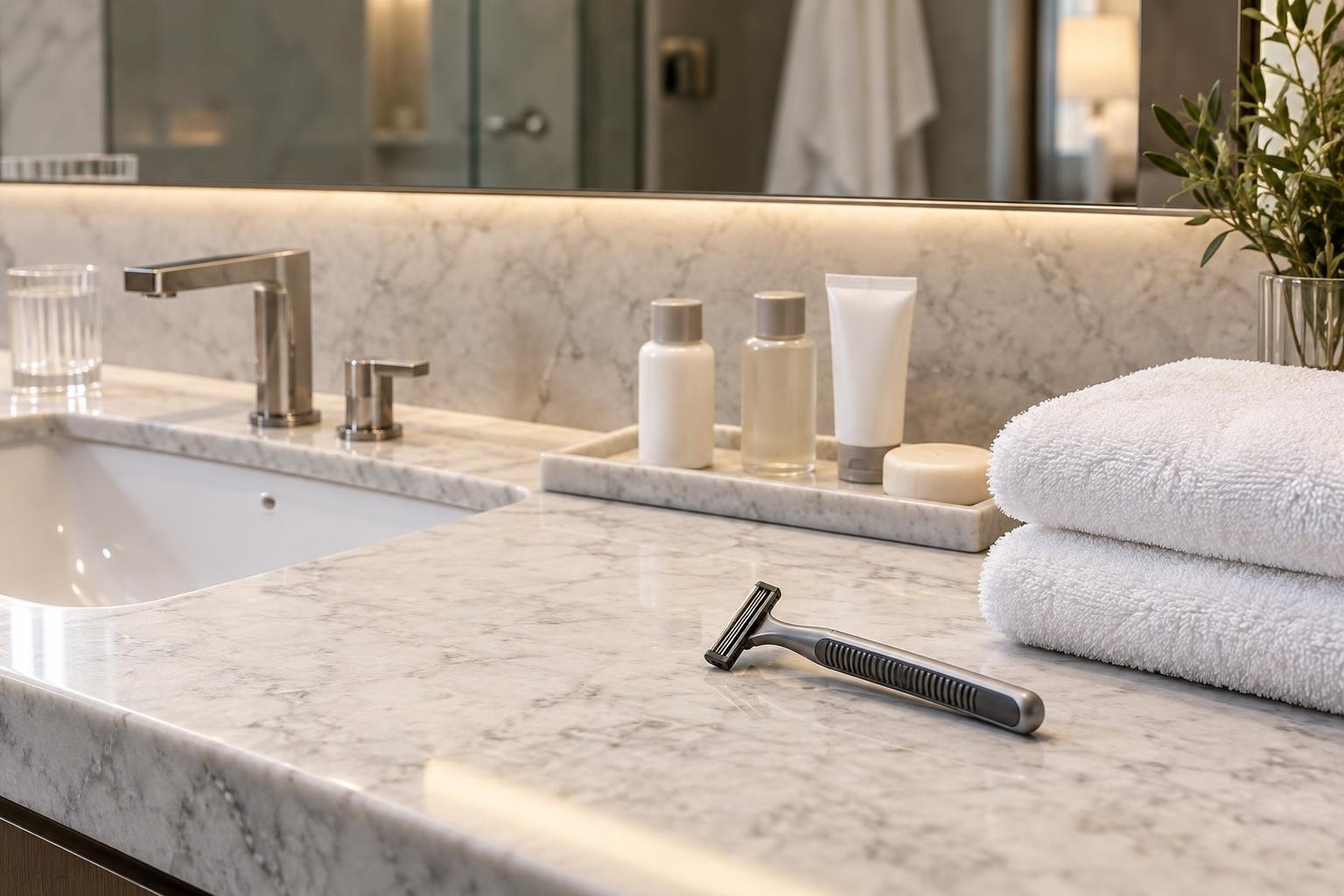
I started with my grandfather’s old Gillette, and after 23 years of wet shaving and testing more than 300 razors, I still have room for a plain disposable in a travel bag. Can you use the hotel’s razor instead of bringing one? Yes, provided it is a new, individually sealed razor in good condition. For an occasional shave, it can do the job. An unwrapped razor beside the sink, however clean it looks, is one I would leave alone.
The practical catch is availability and performance. A hotel may have shaving kits at reception, may charge for them, or may have none left. And the lightweight razor in that little packet may behave quite differently from the safety razor you know at home. Here is how to decide whether to rely on it, get a comfortable shave, and avoid damaging your own equipment if you bring it along.
As an Amazon Associate, I earn from qualifying purchases.
What to ask the hotel before leaving your razor behind
Contact the property itself and ask whether it supplies individually wrapped disposable razors, whether shaving cream comes with them, and whether the kit is complimentary. “Toiletries provided” does not necessarily include shaving equipment. Even a hotel that normally keeps kits can run out, so collect yours when you arrive instead of discovering the shortage before an early meeting.
For one night and an ordinary tidy-up, relying on a confirmed hotel kit is reasonable. For several days, a wedding, or skin that reacts badly to unfamiliar blades, pack a razor you already use comfortably. The space saved by leaving a small razor at home is modest; the inconvenience of hunting for one can be substantial.
My judgment call is simple: a hotel razor is a useful fallback, but a familiar razor earns its place when the shave matters. That does not mean taking a valuable collectible. An inexpensive travel razor you have already tried is often the better companion.
Check the packet before the blade touches your face
Look for an intact individual wrapper that you open yourself. A plastic cap protects the edge, but a cap alone does not establish that the razor is unused. Likewise, a cardboard shaving-kit box can have been opened and closed. If the packaging is ambiguous, ask reception for a fresh sealed kit.
Once opened, check the head under good light without touching the cutting edges. There should be no hair, dried lather, rust spots, cracked plastic, or visibly displaced blades. A sealed packet is evidence of an unused product, not a promise of sterility or flawless manufacture. Reject a razor that looks damaged even if the wrapper was intact.
| What you find | What to do | Reason |
|---|---|---|
| Intact individual wrapper and an undamaged razor | Open it yourself and use with shaving cream | A reasonable option for an occasional shave |
| Loose razor with only a protective cap | Request a sealed replacement | The cap does not establish its history |
| Hair, residue, rust, or damaged blades | Do not use it | Cleaning cannot repair a damaged edge or resolve an unknown history |
| No kit available | Buy a packaged razor locally or postpone shaving | Better than borrowing someone else’s razor |
Do not share the hotel razor with your partner, even for a quick touch-up. The CDC advises against sharing razors as part of preventing MRSA. Visible cleanliness is not enough to make a used personal razor suitable for another person.
How to get a decent shave from a basic hotel razor
A light plastic handle can tempt a regular safety-razor user to press harder because the familiar weight is missing. Resist that adjustment. Start with light contact and short strokes, paying attention to how the head meets your skin. If it has a fixed head, guide it around your jaw deliberately rather than expecting a pivot to follow the contours.
Preparation matters more than an extra pass
Wet your beard thoroughly with comfortably warm water, ideally after a shower, then apply shaving cream or soap that produces a slippery layer. Give the beard time to soften while you work the lather in. Ask for shaving cream if the kit lacks it; ordinary hotel hand soap may lose its slip quickly and leave your skin feeling tight.
Shave with the direction of growth first, using short strokes and rinsing frequently. Neck hair often changes direction, so “with the grain” does not always mean downward. Reapply lather before touching up a missed patch. Avoid dragging the razor repeatedly across skin after the lather is gone.
For this sort of shave, I would accept a little remaining roughness rather than chase an exceptionally close finish with an unfamiliar head. If it tugs after proper preparation and rinsing, replace it or stop. Extra pressure does not turn an uncomfortable blade into a good one.
Clear the head without battering it
Rinse through the head instead of knocking it against the basin. Do not poke between the blades or wipe their edges on a towel. Gillette’s razor-care guidance specifically cautions against sink tapping and towel wiping because they can damage the razor. Those habits are especially unhelpful when the tool already feels flimsy.
Finish by rinsing your face, patting the skin dry, and using a moisturizer you tolerate. If you plan to use the razor again during your stay, rinse it thoroughly and let it air-dry away from puddles. Keep it for your own use and replace it when it becomes rough, clogged beyond rinsing, rusty, or damaged; there is no dependable shave count for an unknown hotel model.
Why disinfecting a questionable hotel razor is the wrong project
Restoring old razors teaches you to separate cleaning, disinfection, and edge condition. Cleaning removes residue. Disinfection requires a suitable product, compatible surfaces, and the specified contact time. Neither process repairs a dull or chipped blade, and neither should be casually described as sterilization.
A splash of aftershave, a rinse under hot tap water, or hand sanitizer smeared over a used head does not establish that it is ready for another person. Closely spaced blades and plastic housings make thorough inspection difficult. With a questionable hotel disposable, requesting a replacement is the sensible answer.
A vintage metal razor is a different project because its replaceable blade can be discarded and its accessible components examined. Even then, an inherited or secondhand tool deserves proper assessment and material-compatible cleaning and disinfection before use. An overnight hotel stay is a poor setting for that work.
My workshop rule is to identify the material and condition before choosing the chemical. Old plating, lacquer, plastic components, and damaged surfaces do not all tolerate the same treatment. Follow the disinfectant label and the razor maker’s instructions where available; do not improvise a universal soak time or assume that stronger means better.
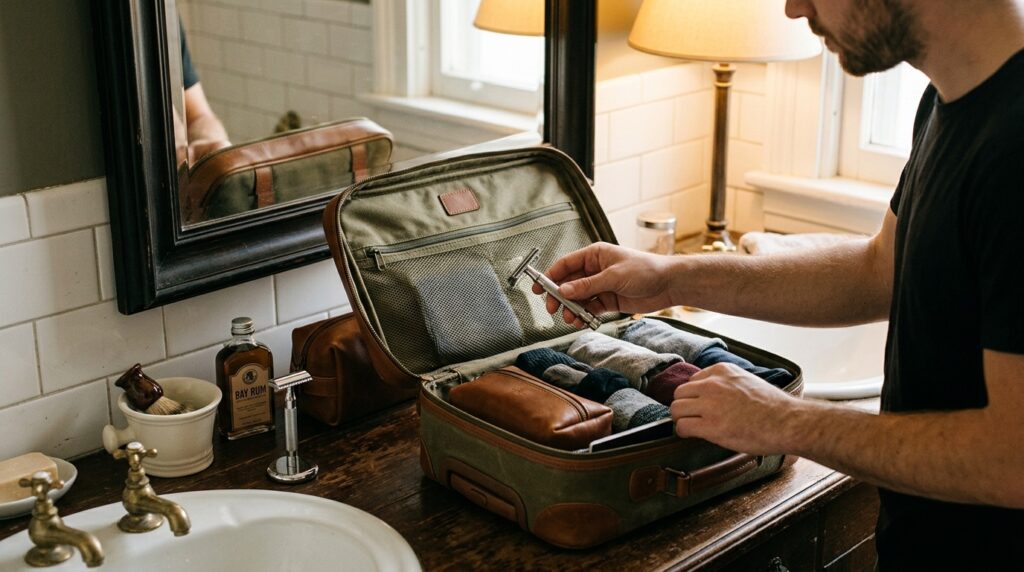
Bringing a safety razor: TSA rules and the blade problem
For U.S. airport screening, the distinction is between enclosed disposable or cartridge blades and removable safety-razor blades. TSA permits a safety razor in carry-on baggage without its blade. Loose double-edge blades belong in checked baggage, securely protected. Moving a blade from the razor into a paper wrapper inside your carry-on does not make it permitted.
Disposable razors and their replacement cartridges are permitted in carry-on baggage. That makes a familiar cartridge or disposable a practical option when you do not want to arrange blades at your destination. Inspect every compartment of your shaving bag before packing; an old spare tuck of double-edge blades is easy to overlook.
If you take an empty safety razor, confirm a local source for compatible blades before departure. A hotel shaving kit will not necessarily contain any, and a shop selling cartridges may not stock double-edge blades. On the return journey, the same carry-on restriction applies to blades you purchased during the trip.
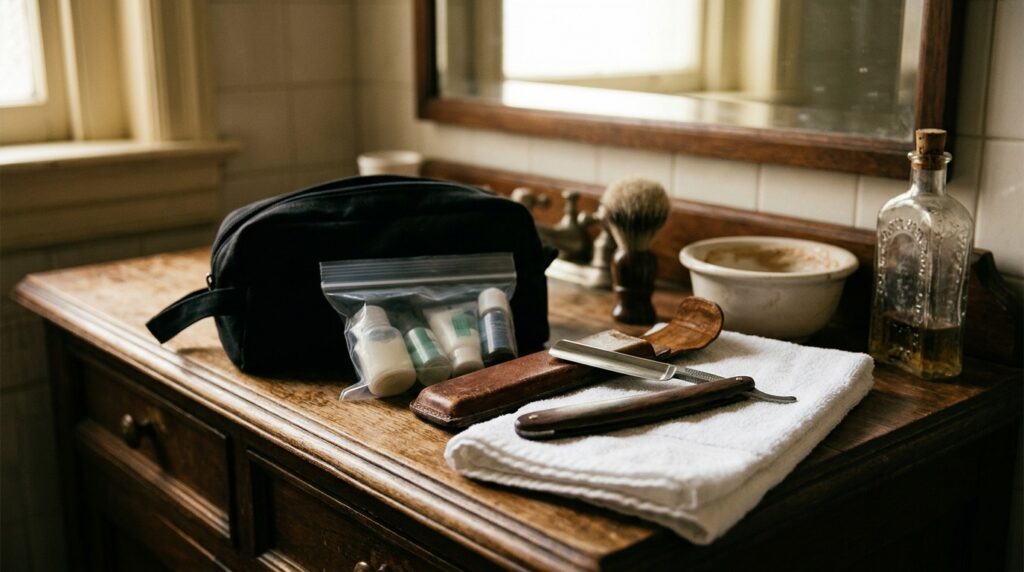
Shaving cream and gel also need packing attention: ordinary carry-on liquids, creams, gels, and aerosols must be in containers of 3.4 ounces or 100 milliliters or less, fitting in the single quart-sized bag allowed per passenger under TSA’s liquids guidance. Check current rules before flying, including the relevant authority for foreign departures. The screening officer makes the final decision at a TSA checkpoint.
Protecting a good razor in a hotel bathroom
The bigger threat to an old razor on a trip is often careless handling: dropping it onto tile, forcing its threads, or closing it into luggage while wet. A plated brass razor can survive decades of careful service, yet still lose finish to an abrasive cleaner. A zinc-alloy part with damaged plating deserves particular care because exposed base metal can corrode.
My grandfather’s razor taught me to respect what remains of an old finish. Polishing away every mark is not preservation; abrasive polishing removes material, and thin plating gives you very little allowance. For travel maintenance, leave metal polish, scouring pads, bleach, and improvised vinegar baths out of the routine. A stubborn stain can wait until you have identified it at home.
Pack tools for gentle cleaning and dry storage
For routine cleaning of your own sound metal razor, use mild dish soap, warm water, and a dedicated extra-soft-bristle toothbrush when residue needs loosening. Remove the blade safely before brushing accessible metal surfaces; never brush the cutting edges. MERKUR’s care guidance likewise recommends a soft brush and gentle washing products for routine upkeep.
Rinse away the soap, gently dry accessible metal parts, and allow crevices to air-dry. Do not wrench a sticky mechanism or overtighten the handle. If packing time arrives before the razor is dry, reopen its container at your destination and finish drying it promptly.
A hard-shell safety razor travel case can help prevent crushing and contact with other toiletries. Check its internal dimensions against your assembled razor, particularly for long handles and adjustable heads. A case protects the tool during transport; it does not make damp storage harmless. Keep a sentimental heirloom home if losing it would overshadow the trip.
Frequently asked questions about hotel razors
Are hotel razors free?
Sometimes. Availability, charges, and kit contents depend on the property. Ask reception specifically about a sealed shaving kit rather than assuming it comes with the room or the brand’s usual amenities.
Should I disinfect a brand-new hotel razor?
An intact, sealed consumer razor normally needs no improvised chemical treatment before ordinary personal use. Inspect it and follow any package directions. If its cleanliness or condition is questionable, ask for another one instead of trying to rescue it.
Can I take the hotel razor on the plane home?
A conventional disposable or cartridge razor is permitted in carry-on baggage under TSA rules. Protect the head during packing. If it is an unusual model with a removable exposed blade, check its classification rather than assuming every hotel razor qualifies.
Is a hotel razor good enough for sensitive skin or a heavy beard?
Possibly, but an unfamiliar head is a gamble when you already know certain razors disagree with you. Bring a proven tool for predictable results. If the hotel kit is your only option, prepare thoroughly, use light pressure, and stop if it pulls rather than compensating with repeated passes.
A fresh sealed hotel razor can get you presentable for the morning. Ask for it early, inspect it, and keep the shave modest. Good shaving judgment travels better than any particular handle.
What I Would Check Before Buying a Full Box
- How dense your beard is and whether mild blades usually leave you doing extra cleanup passes.
- Whether your current razor already shaves on the mild side, because that can make a comfort-first blade feel too soft.
- How much you value skin comfort versus raw first-pass efficiency.
- Whether it makes more sense to test a small tuck first instead of committing to a 100-pack.
That short checklist usually tells me faster than online hype whether a blade is actually worth testing in a specific shave setup.
Tradeoffs, uncertainty & affiliate disclosure
A closer shave can require more passes and may reduce comfort. Product feel varies with razor, blade, lather, angle, pressure, beard growth, and personal preference. ClassicBlade does not imply that every mentioned item was purchased, used, measured, or independently tested.
Some links may be affiliate links. ClassicBlade may earn a commission at no added cost to you; commercial links do not stand in for evidence.

Leave a Comment