Best Aftershave Balms for Sensitive Skin: Soothing and Non-Irritating Picks
Best Aftershave Balms for Sensitive Skin: Soothing and Non-Irritating Picks
I’ve been wet shaving for over two decades. In that time I’ve tested more than 300 razors and, along the way, burned through more aftershave products than I care to count — including a few that turned my face into a red, stinging mess. If you have sensitive skin, you already know: the wrong aftershave can undo everything a great shave accomplished.
This guide is specifically for sensitive-skin shavers. No fillers, no “best of everything” padding. I’ll tell you exactly what makes a balm work for reactive skin, flag the ingredients to avoid, and give you my honest picks — including what I actually keep in my own rotation right now.
Why Sensitive Skin Reacts to Aftershave
Shaving is controlled trauma. Every pass of a blade — even a perfectly sharp, well-angled one — removes a microscopic layer of skin along with the hair. For most people, this is a minor non-event. For sensitive skin, that disruption is enough to trigger inflammation, redness, and irritation.
Then you apply aftershave and make it worse. The classic alcohol-heavy splash was designed to disinfect and close pores fast. It does that — but it also strips the acid mantle (your skin’s natural protective barrier), causes a burst of stinging, and leaves skin drier and more reactive than before you started. Fragrance compounds are the second big offender: synthetic perfumes are among the most common contact allergens in personal care products, and freshly shaved skin absorbs them readily.
The result is the familiar post-shave burn that many shavers assume is just “normal.” It’s not. The right balm should feel like a cool hand on sunburned skin — immediate relief, zero sting, lasting calm.
What to Look for in an Aftershave Balm for Sensitive Skin
When I’m evaluating a balm for sensitive skin, I run it through a short checklist before it even touches my face:
Alcohol-Free Formula
Non-negotiable. Denatured alcohol (you’ll see it as “alcohol denat.” or “SD alcohol” on the label) is the single biggest source of post-shave irritation. It evaporates fast, taking moisture with it, and disrupts the skin barrier you need intact after shaving. Skip it entirely.
Soothing Actives
The ingredients doing the real work in a good sensitive-skin balm:
- Allantoin — a cell-proliferating agent derived from comfrey. Reduces redness and helps skin heal micro-abrasions faster. One of my favorite marker ingredients for quality formulas.
- Aloe vera — anti-inflammatory, hydrating, and cooling. Should be high on the ingredient list (meaning high concentration), not just a marketing bullet point.
- Bisabolol — derived from chamomile. Potent anti-irritant, helps reduce redness and calm reactive skin.
- Panthenol (Pro-Vitamin B5) — draws moisture to the skin and supports barrier repair.
- Glycerin — a humectant that keeps skin hydrated without any irritation risk.
Fragrance-Free or Minimally Scented
Fragrance (listed as “parfum” on EU-formulated products) is a blanket term for potentially dozens of compounds, some of which are common sensitizers. For truly reactive skin, fragrance-free is safest. For mild sensitivity, naturally-derived scents from essential oils at low concentrations are usually tolerable — but patch test first.
Lightweight, Non-Comedogenic Texture
Sensitive skin and heavy, occlusive balms don’t mix well. You want something that absorbs in under a minute and doesn’t leave a greasy residue that traps bacteria in freshly opened follicles.
Ingredients to Avoid if You Have Sensitive Skin
I’ve seen some expensive, beautifully packaged balms that are essentially landmines for sensitive skin. Here’s what I flag immediately on any ingredient label:
- Alcohol denat. / SD alcohol — strips the skin barrier, causes stinging
- Synthetic fragrance (“parfum” / “fragrance”) — top contact allergen
- Menthol (high concentration) — cooling sensation can mask ongoing irritation; at high doses it’s an irritant itself
- Witch hazel with alcohol base — some witch hazel products are alcohol-free and fine; the standard ones are not
- Parabens — controversial, but sensitive skin types frequently report reactions
- Artificial colorants (D&C dyes) — no functional benefit, meaningful irritation risk
- Eucalyptus oil (undiluted) — even natural oils can be potent irritants at higher concentrations
One rule of thumb: if the first five ingredients look like a chemistry set, put it back.
Balm vs. Splash for Sensitive Skin: Which Should You Use?
I get this question constantly, so let me settle it.
Traditional aftershave splashes — your Bay Rums, your barbershop classics — are built around alcohol. The formula is roughly: alcohol to disinfect and tighten pores, water to dilute, fragrance for the scent experience. They’re great. They feel masculine and ritualistic and a lot of wet shavers love them.
But if you have sensitive skin, an alcohol splash after shaving is asking for trouble. You’re applying a solvent to compromised, freshly abraded skin. Even if you don’t feel a dramatic burn in the moment, repeated exposure damages the skin barrier over time and makes your skin progressively more reactive.
For sensitive skin: always a balm. There are a few alcohol-free splash-format products that use witch hazel as the base instead of alcohol — those can work — but in general, if you’re reacting to aftershave, switch to a balm format and see if the problem resolves. It usually does within a week.
If you love the ritual of a splash, you can use a small amount as a pre-balm toner (pat on, let it mostly dry, then apply balm on top) — but only if the splash is gentle enough and your skin can handle it.
My Top Aftershave Balm Picks for Sensitive Skin
These are products I’ve personally used for extended periods — not just a one-week test. I’m looking for: consistent performance, clean ingredients, honest pricing, and real soothing ability on reactive skin.
1. Nivea Men Sensitive Post Shave Balm
I’ll start here because I recommend this to every beginner with sensitive skin without hesitation. It’s cheap, it’s widely available, and it flat-out works. The formula is built around chamomile extract and vitamin E, it’s alcohol-free, and it absorbs quickly without any greasy residue. I’ve used this as my “control” product when testing more expensive balms — plenty of them don’t beat it.
Pros: Excellent price-to-performance ratio; fragrance is minimal and non-irritating; widely available; absorbs fast.
Cons: Contains some synthetic fragrance (though very light); not fully fragrance-free if that’s a hard requirement.
2. Taylor of Old Bond Street Aftershave Balm (Sensitive)
TOBS makes some of my favorite shaving soaps and their sensitive balm is cut from the same cloth — thoughtful formulation, quality ingredients. Allantoin is prominently featured, the aloe concentration is high enough to actually do something, and the scent is genuinely subtle. It’s more expensive than the Nivea, but it feels more substantive on the skin and I find it works better for significant razor burn recovery.
Pros: High allantoin content; soothing performance is noticeably better for red, irritated skin; premium but not absurd pricing.
Cons: Not fully fragrance-free; slightly thicker texture takes a bit longer to absorb.
3. Proraso Aftershave Balm (Sensitive, Green Tea & Oat)
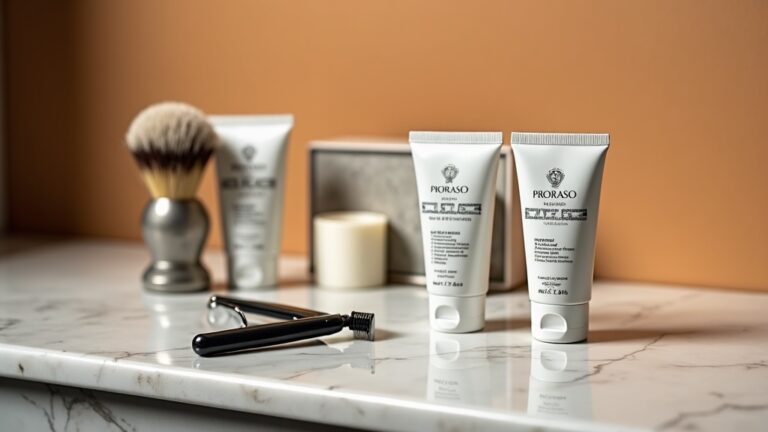
Proraso is an Italian brand with decades of wet shaving credibility, and their sensitive line is specifically built for reactive skin. The green tea and oat formula is one of the cleaner ones in the mid-range: no alcohol, bisabolol in the formula, and a lightweight milky texture that disappears into the skin within seconds. It has a very faint herbal scent that most sensitive-skin shavers tolerate well.
Pros: Bisabolol and oat extract combination is excellent for calming irritation; lightweight formula; attractive price.
Cons: The green tea scent, while mild, isn’t fully neutral — fragrance-sensitive shavers should patch test.
4. Every Man Jack Sensitive Skin After Shave Lotion
This one flies under the radar in wet shaving circles because it doesn’t have old-school barbershop provenance, but the formula is genuinely excellent for sensitive skin. It uses a blend of aloe, glycerin, and allantoin, it’s certified free of parabens and artificial fragrance, and the price is very competitive. For shavers dealing with chronic irritation who want maximum ingredient cleanliness, this is a serious option.
Pros: Free of artificial fragrance, parabens, and dyes; transparent ingredient list; very affordable; great for building-block sensitive skin routines.
Cons: Light natural scent from botanical extracts; thinner consistency than some prefer.
5. Baxter of California After Shave Balm
If you want to step up in terms of texture and perceived luxury without going full artisan pricing, Baxter of California delivers. Their balm is thicker and more emollient than most of the above — excellent for shavers whose skin also tends toward dryness rather than just sensitivity. The formula includes aloe vera, witch hazel (alcohol-free version), and vitamin E. The scent is “clean cedar” — subtle and masculine but present, so fragrance-avoiders should be aware.
Pros: More emollient formula great for dry-sensitive skin; premium feel; long-lasting moisture.
Cons: Noticeable fragrance (natural-derived but real); pricier than the above options.
6. The Art of Shaving After-Shave Balm (Unscented)
The Art of Shaving makes it easy: they offer a fully unscented version of their balm specifically for sensitive skin. No guesswork on the fragrance question. The formula uses shea butter and aloe vera as the backbone, and it’s one of the most effective options I’ve found for genuinely reactive skin that responds to almost everything else. It’s expensive — this is the splurge pick — but if you’ve exhausted cheaper options and are still reacting, it’s worth the trial.
Pros: Truly fragrance-free; shea butter formula provides exceptional moisture; designed explicitly for sensitive skin.
Cons: Premium price; shea butter formula is richer and may feel heavy in summer or humid climates.
How to Apply Aftershave Balm Correctly
Application technique matters more than most people realize, and I see the same mistakes over and over.
Step 1: Rinse with cool water. Not cold — cool. Cold water causes vasoconstriction which can trap irritants. Cool water closes pores gently and prepares the skin without shock.
Step 2: Pat mostly dry. Leave your skin slightly damp when you apply balm. The residual water helps the balm spread and aids absorption of humectant ingredients like glycerin.
Step 3: Warm the balm first. Dispense a pea-sized amount into your palm, then rub your palms together briefly. Applying a cold balm to reactive skin adds unnecessary shock.
Step 4: Press, don’t rub. Use a pressing motion to apply balm to your face and neck. Rubbing on freshly shaved skin creates friction that can cause additional irritation. Press gently and let the product do its work.
Step 5: Give it time. Wait 60 seconds before applying anything else — sunscreen, moisturizer, whatever comes next in your routine. Give the balm a chance to absorb and form a light protective layer.
One more thing: if you’re dealing with a nick or cut, apply gentle pressure with a damp cloth first, let it stop bleeding, then apply the balm around (not directly on) the cut. Most balms aren’t antiseptics — they’re soothing agents. An alum block is better for cut treatment.
Final Thoughts
Sensitive skin and wet shaving are not mutually exclusive. I’ve seen guys with genuinely reactive skin build routines that leave their faces feeling better after shaving than before — it just requires the right tools and a clean ingredient list.
Start with the Nivea Sensitive if you’re on a budget and want a no-risk entry point. Move to Proraso or TOBS if you want to step up in ingredient quality. If you have truly reactive skin that responds to almost everything, go straight for The Art of Shaving Unscented — sometimes the cleanest formula is worth the price.
The shave itself matters too. A sharp blade (fewer passes = less irritation), proper prep, and a quality lather do as much work as any aftershave product. But if you’re already doing those things and still reacting, your aftershave is almost certainly the culprit. Switch to a well-formulated balm and give it two weeks. You’ll know.
— Thomas Hargrove, ClassicBlade

About Thomas Hargrove
Traditional Wet Shaver — 23 Years, 300+ Razors Tested
Thomas Hargrove picked up his grandfather’s safety razor at 19 and never looked back. Twenty-three years and 300+ razors later, he’s one of the most experienced wet shavers writing on the internet today. At Classic Blade, he reviews gear with the same precision he brings to every shave — unhurried, exacting, and always worth reading. Read more →