
The quick take
Verdict, audience & limits
Best DE Razor Blade Sampler Packs: How to Find Your Perfect Blade
Affiliate Disclosure: ClassicBlade.com is reader-supported. When you buy through links on this page, we may earn a small commission at […]
Who this is for
Readers deciding whether this shaving topic, method, or product category fits their routine and preferences.
What this cannot promise
A universal result, irritation-free shave, medical outcome, or firsthand product test unless that specific use is explicitly documented.
Specifications & source boundary
Model dimensions, materials, blade compatibility, and loading instructions should be checked against the maker’s documentation for the exact product and version. Manufacturer specifications are not independent measurements, and a photograph is not evidence of a product test.
How to read the evidence
Applies only where a specific razor, blade, or product and its conditions are explicitly identified.
Maker-supplied details should be checked against the exact model, market, and version.
A cautiously summarized pattern across identified sources, with disagreement acknowledged.
Background or explanatory framing, not a testing credential or objective measurement.
A subjective choice about feel, cost, convenience, or ritual—not a universal recommendation.
Technique variables
Change one thing. Pay attention.
Lather & preparation
Soften the beard with water, build a comfortably slick lather, and reapply before another pass.
Angle & pressure
Use light pressure and a shallow, familiar angle appropriate to the razor. Do not press harder to compensate for tugging.
Direction & passes
Begin with the grain, use fewer deliberate passes, and let comfort matter more than chasing perfect closeness.
Blade handling
Follow loading instructions, hold only unsharpened sides, and keep cutting edges away from fingers.
Use light pressure, fewer deliberate passes, and stop for pain or persistent irritation. Keep unused blades dry, secure, and away from children and pets. Place used blades in a closed puncture-resistant container and follow local disposal guidance. This is general grooming guidance, not medical advice.
Affiliate Disclosure: ClassicBlade.com is reader-supported. When you buy through links on this page, we may earn a small commission at no extra cost to you. Recommendations distinguish documented firsthand use from identified community evidence and personal preference for.
I still remember standing in front of my grandfather’s medicine cabinet, holding his old Gillette Tech, convinced that the razor was everything. Swap the razor, better shave — that was my assumption for the first couple of years. It wasn’t until I started seriously testing blades that I understood what I’d been missing. The blade isn’t just part of the equation. For most shavers, it is the equation.
After 23 years in this hobby, 300-plus razors tested, and more blade brands than I care to count, I can tell you that two guys can pick up identical Merkur 34Cs and have completely different experiences — simply because one is running Feather blades and the other is running Derby. That’s not hyperbole. It’s just how double-edge shaving works.
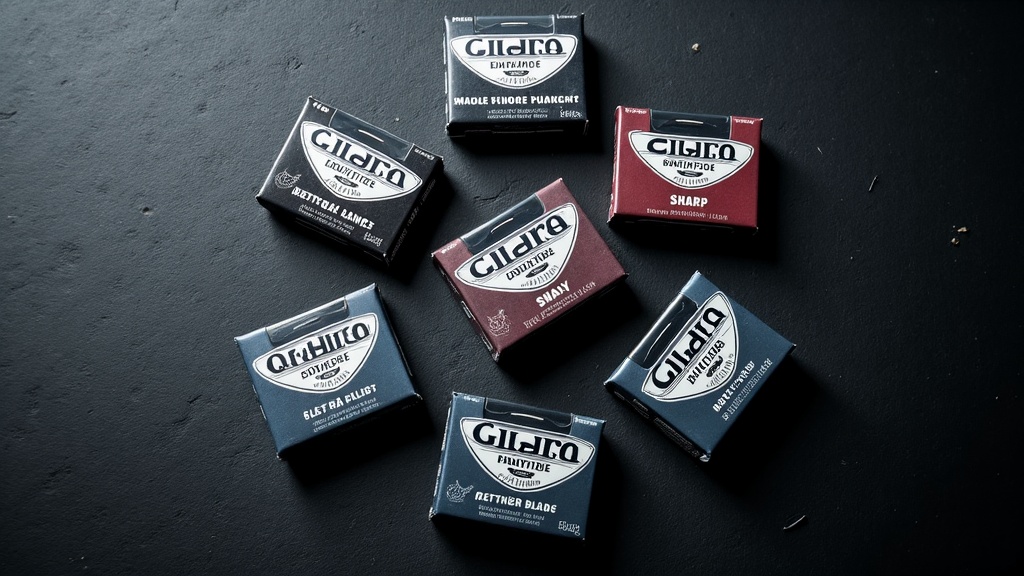
The good news: DE razor blade sampler packs exist precisely to solve this problem. Instead of buying 100-count boxes of a blade you’ve never tried, you can test eight, ten, or fifteen different brands for a few dollars. It’s the smartest first purchase any wet shaver can make. This guide walks you through how to pick the right sampler, how to test blades properly, and what you’re actually looking for.
Browse DE Blade Sampler Packs on Amazon →
Why Blade Choice Matters as Much as Your Razor
Here’s a reality check that most beginner guides gloss over: a DE razor is really just a blade holder. The geometry — blade gap, blade angle, blade exposure — determines how aggressive or mild the shave feels. But within that geometry, the blade itself controls sharpness, smoothness, and how many comfortable shaves you get per edge.
Two blades can have the same width and still feel worlds apart. A Feather is noticeably sharper than a Derby out of the box. A Voskhod has a coating that some people describe as buttery; others find it drags after the first shave. A Gillette Platinum holds its edge unusually well across four or five shaves where cheaper blades are already pulling.
Your skin type, beard coarseness, shave angle, water hardness, and even the soap you use all interact with blade chemistry in ways that are genuinely personal. There is no universal “best blade.” Anyone who tells you otherwise is either selling something or hasn’t tested enough blades. What there is, is a best blade for you — and the only way to find it is systematic testing.
That’s not a negative. It’s actually one of the most enjoyable parts of this hobby. And with a safety razor blades variety pack, the whole discovery process costs you less than a single cartridge razor refill.
Why Sampler Packs Are the Smart Approach
There are somewhere between 30 and 50 commercially available DE blade brands, depending on how you count regional variants. Buying full boxes of each to find your match would cost hundreds of dollars and take years. A sampler pack solves this by giving you two to five blades of each major brand — enough to run a real test — for a total outlay of $10 to $25.
Beyond the economics, samplers expose you to the full spectrum of blade personalities:
- Ultra-sharp, unforgiving blades (Feather, Kai) — maximum efficiency, require good technique
- Sharp and smooth (Astra SP, Gillette Platinum, Voskhod) — the sweet spot for most shavers
- Mild and forgiving (Derby, Merkur, BIC) — great for beginners or sensitive skin, easier to control
- Value workhorses (Shark, Personna, 7 O’Clock) — solid everyday performers at bulk prices
Without running the spectrum, you might land on a “pretty good” blade and stop there — never knowing there was a better match waiting. I did exactly that with Astra for two years before a sampler introduced me to Gillette Platinums, which flat-out work better in my specific razors and with my beard.
How to Run a Proper Blade Test
Testing blades haphazardly gives you useless data. If you change your razor, your prep, your soap, or your technique between blades, you can’t isolate what the blade is actually doing. Here’s the protocol I use, and what I recommend to anyone serious about finding their match:
The Controlled Test Setup
- Use one razor throughout all testing. Pick a mid-range razor — a Merkur 34C, Edwin Jagger DE89, or similar. Consistent geometry eliminates variables.
- Same soap, same brush, same post-shave routine. Your prep affects how the blade glides. Keep it identical.
- Give each blade at least 3 shaves, ideally 4. Many blades feel rough on shave one and smooth out by shave two. Others degrade fast. You need the full arc.
- Shave the same days each week. Beard length at shave time affects the test.
- Take notes. I use a simple rating — sharpness (1-5), smoothness (1-5), longevity (shaves until it starts dragging), and overall score. A notebook works fine. So does a phone note.
What You’re Rating
- Sharpness: Does it cut cleanly without pressing? Tugging indicates dullness.
- Smoothness: Is there any scratchiness or drag mid-stroke, even when sharp?
- Longevity: How many shaves before the edge noticeably degrades?
- Skin feel after: Irritation, redness, or razor burn points to a mismatch — either technique or blade.
One note for beginners: if a blade causes irritation on every shave, don’t immediately blame the blade. Check your angle, your pressure (lighter than you think), and your prep. That said, genuine sharpness-induced irritation — micro-cuts, razor burn along the grain — is a real signal that a blade is too aggressive for your current technique level.
The Major Sampler Packs: What’s Inside and What to Expect
Most quality samplers pull from the same core set of global blade manufacturers. Here’s a breakdown of the brands you’ll encounter and what they actually feel like:
Feather (Japan)
The benchmark for sharpness. Feather blades are made in Japan to extremely tight tolerances and are legitimately the sharpest DE blades in wide distribution. They’re not for beginners — if your angle or pressure is off, Feather will punish you for it. But once your technique is solid, they deliver an incredibly clean, efficient shave. High-reward, high-skill-floor.
See Feather blades on Amazon →
Astra Superior Platinum
Made by Gillette in Russia, Astras are the most recommended “starter sharp” blade in the wet shaving community — and for good reason. They’re sharp enough to be efficient, smooth enough not to bite, and cheap enough to use without guilt. If I could only put one blade in a beginner’s hand, it’d be Astra SP.
See Astra Superior Platinum on Amazon →
Gillette Silver Blue / Gillette Platinum
Two different blades worth knowing. Gillette Silver Blue is sharp, smooth, and very consistent — a top-three blade for many experienced shavers. Gillette Platinum is coated for extra smoothness and holds its edge unusually well; I regularly get six comfortable shaves per blade, which is exceptional. Both are a significant step up from entry-level blades.
Derby Extra
Turkish-made, mild, and forgiving. Derby blades are not the sharpest, but they’re consistent and comfortable — a good blade for learning technique when you want less margin for error. Some experienced shavers find them too mild; others use them daily in more aggressive razors where the milder blade balances the geometry.
Shark Super Chrome / Shark Super Stainless
Egyptian-made and criminally underrated. Sharks are sharper than Derby, smoother than people expect given the price, and widely available in bulk for almost nothing. Super Chrome is the one to try first — it’s smooth with a reliable edge. I’ve recommended Shark to dozens of people who needed a budget everyday blade and never had a complaint.
Personna (Lab Blue / Med Prep)
American-made and the blade of choice for a lot of shavers with sensitive skin. Personna Lab Blue in particular has a reputation for being incredibly smooth — not the sharpest out of the box, but consistent and gentle. The Med Prep version (medical-grade) is even smoother and worth tracking down if regular Lab Blue leaves any irritation.
Merkur
Made in Germany (same company as the razors), Merkur blades are mild, smooth, and consistent. They’re not going to wow anyone with sharpness, but they’re a reliable, quality blade that pairs well with aggressive razors where you want the blade to be the calmer variable.
BIC Chrome Platinum
BIC makes an underappreciated DE blade that most Americans overlook. It’s sharp, has a decent coating, and lasts well. If your sampler includes BIC, don’t skip it — it surprises a lot of testers who expect a disposable-brand-level experience.
Voskhod
Russian-made and a cult favorite. Voskhod has a distinctive teflon coating that provides an unusually smooth first shave. Some shavers — myself included at various points — consider it their go-to. The coating can start to fade by shave three or four, so longevity testing matters here.
Matching Blades to Your Razor
This is the part most beginner guides miss entirely: blade-razor pairing is real, and it matters.
Aggressive razors (wide blade gap, high blade exposure — think Merkur 34C’s more aggressive sibling, the 37C slant, or Muhle R41) already do a lot of cutting work. Running a Feather in an R41 is asking for trouble unless your technique is dialed in. In aggressive razors, milder blades like Derby, Merkur, or Personna can paradoxically give you a better result — the razor provides the aggression, the blade provides the smoothness.
Mild razors (small blade gap, minimal exposure — Edwin Jagger DE89, Merkur 23C, most vintage Gillette Techs) benefit from sharper blades. If you’re running a Derby in a mild razor and feeling like you need to make extra passes to get a clean shave, the blade isn’t keeping up with the razor’s passive geometry. Step up to Astra SP, Gillette Silver Blue, or Feather.
Mid-range razors (Merkur 34C, Rockwell 6C, Parker 99R) are the sweet spot for testing because they’re forgiving enough to handle a range of blade profiles. If you’re starting out, this is where I’d recommend testing.
Your beard coarseness adds another layer. Coarse, thick beard requires a sharper or longer-lasting blade. Fine beard can get away with milder blades across more shaves.
My Testing Protocol for Beginners (And My Current Favorites)
If you’re just getting into DE shaving, here’s the sequence I’d hand you:
- Buy a sampler pack with at least 8-10 blade brands. Aim for one that includes Feather, Astra, Gillette, Derby, Shark, Voskhod, and Personna at minimum.
- Start with Astra SP. It’s your baseline — sharp, smooth, forgiving enough to work while you’re building technique.
- Run 3 shaves per blade. Take notes. Rate sharpness, smoothness, and skin feel.
- After the full sampler, identify your top 2-3. Buy 10-count boxes of each and run another comparison to confirm.
- Buy your winner in bulk. DE blades are cheap in 100-count — usually $10-$20 for a year’s supply.
As for my current rotation after 23 years: Gillette Platinum is my daily driver in my Karve CB with a C plate. Feather goes in when I’m using a mild vintage razor and want maximum efficiency. Voskhod gets pulled out for travel — one blade, a few shaves, done. Shark Super Chrome lives in my dedicated travel kit because I don’t cry if I lose a blade at airport security.
My grandfather’s blade of choice, for what it’s worth, was the old Gillette Super Blue — which you can still find in some samplers and is worth trying for history’s sake if nothing else.
Ready to start testing? Here’s a solid place to begin:
Browse DE Razor Blade Sampler Packs on Amazon →
Frequently Asked Questions
How many blades should a good sampler pack include?
Look for samplers that cover at least 8-10 different brands, with 3-5 blades of each. This gives you enough shaves per blade to do a real test (3-4 shaves minimum) while covering the major blade profiles — ultra-sharp, mid-range, and mild.
How long should I use each blade before judging it?
At least 3 shaves, ideally 4. Many blades feel rough on shave one due to factory coatings breaking in. Judging a blade on one shave is one of the most common beginner mistakes. Some blades, like Voskhod, peak on shave two and decline by shave four — you only see the full picture with multiple shaves.
Is the most expensive blade always the best?
No. Astra SP costs under $10 for 100 blades and outperforms blades that cost five times more in many razor-skin combinations. Blade performance is personal, not linear by price. Feather is expensive relative to Derby, but if Derby works better in your razor with your skin, that’s your answer.
Can I use DE blades in any safety razor?
All standard double-edge safety razors use the same blade size — the DE format is universal. Blades fit any DE razor regardless of brand. The blade-razor interaction that matters is how the razor’s geometry uses the blade, not whether the blade physically fits.
When should I throw out a blade?
When it starts pulling, tugging, or causing irritation that wasn’t there on earlier shaves. There’s no fixed number — some cheap blades go dull after two shaves; quality blades like Gillette Platinum can last six or more. Don’t push a dull blade trying to get value out of it. DE blades cost pennies; razor burn costs you days of comfort.
Tradeoffs, uncertainty & affiliate disclosure
A closer shave can require more passes and may reduce comfort. Product feel varies with razor, blade, lather, angle, pressure, beard growth, and personal preference. ClassicBlade does not imply that every mentioned item was purchased, used, measured, or independently tested.
Some links may be affiliate links. ClassicBlade may earn a commission at no added cost to you; commercial links do not stand in for evidence.
Leave a Comment