Can I sharpen and reuse double edge blades?
I?ve been wet shaving for 23 years, and the short answer is yes: you can sometimes stretch the life of a double edge blade, but you usually can?t truly ?sharpen? it back to factory performance at home. My grandfather taught me to respect a razor edge, and after testing more than 300 razors and a mountain of blades, I?ve learned that careful drying, smart storage, and knowing when to replace a blade matter a lot more than trying to grind a tired edge back to life.
If you?re asking whether it?s worth sharpening and reusing double edge blades, the practical answer is this: reuse them a handful of times if they still shave comfortably, but don?t expect stropping tricks or DIY sharpening methods to make an old blade shave like new. Double edge blades are cheap, thin, and coated at the factory with precision that is very hard to recreate on a bathroom counter.
Can I sharpen and reuse double edge blades?
You can definitely reuse a double edge blade until it becomes dull, tuggy, or irritating. Most shavers get anywhere from 3 to 7 good shaves from one blade, though that varies based on beard coarseness, prep, razor aggressiveness, and blade brand. What you generally cannot do in a meaningful way is restore the edge to its original keenness with home sharpening.
That difference matters. Reusing a blade is normal. Sharpening a blade is mostly a myth in the sense people hope for. Some old-school techniques may help a blade feel smoother for one more shave, but they do not rebuild the fine, coated edge created during manufacturing.
Why double edge blades dull so quickly
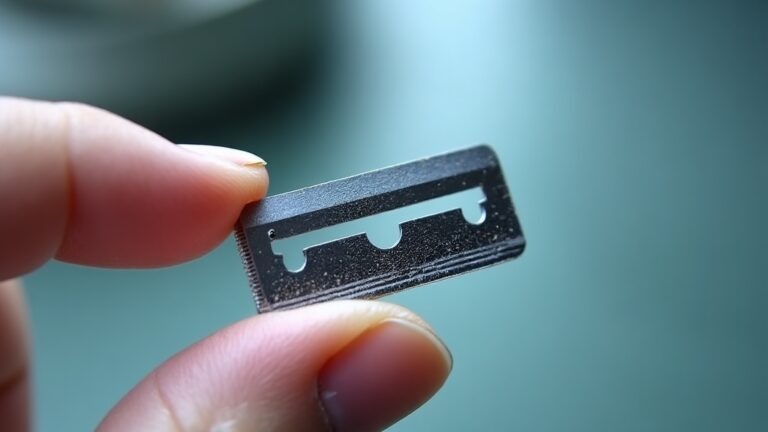
Double edge razor blades are extremely thin pieces of hardened stainless steel. The cutting edge is refined at the factory and often finished with coatings such as platinum, chromium, PTFE, or similar treatments that help the blade glide and resist corrosion. Once that edge degrades, it is not just a matter of ?making it sharp again.? You are also dealing with worn coatings, micro-chips, and edge deformation too small to see with the naked eye.
In plain terms, a used blade may still cut whiskers, but it loses the smoothness and consistency that make a shave comfortable. That is why an old blade often feels tuggy before it feels completely blunt.
Can you actually sharpen a double edge blade at home?
Not in the way most people mean. A proper sharpening process would require holding an extremely thin blade at a consistent angle across an abrasive surface fine enough to refine the edge without warping it. That is difficult enough with a knife. With a DE blade, it is even harder because the blade is flexible, tiny, and already ground to a very narrow geometry.
What about stropping on denim, leather, or your palm?
Stropping is the method most often mentioned online. Some shavers drag a blade backward on denim, leather, or even the forearm or palm to remove residue and realign tiny burrs. In some cases, that can make the next shave feel a little smoother. But it is better understood as edge maintenance or cleaning, not real sharpening.
It also comes with risk. Handling a bare DE blade outside the razor is one of the easiest ways to nick your fingers. If you choose to try stropping, do it with the blade mounted in the razor, move spine-first rather than edge-first, and treat the result as marginal at best. If a blade is already uncomfortable, replace it instead.
Sharpening vs. reusing: what?s worth your time?
| Method | What it does | Upside | Downside | My take |
|---|---|---|---|---|
| Normal reuse | Use the blade for several shaves until performance drops | Easy, safe, economical | Blade still eventually dulls | Best approach for most people |
| Careful drying after use | Reduces corrosion and soap residue | May extend blade life modestly | Requires a little routine | Worth doing |
| Stropping on denim or leather | May clean or slightly realign the edge | Can improve one shave for some users | Risky handling, inconsistent results | Optional experiment, not a fix |
| DIY abrasive sharpening | Attempts to regrind the edge | Theoretical edge restoration | Impractical, can ruin blade geometry | Not worth it |
| Replacing the blade | Starts fresh with a factory edge | Best comfort and consistency | Ongoing blade cost | Usually the smartest move |
How to make double edge blades last longer
If your real question is how to get more value from each blade, this is where the useful gains are. I?ve seen many shavers waste money by using poor technique, then blame the blade. A fresh blade can die early if your prep is weak and your pressure is heavy.
1. Shave with light pressure
Let the razor do the work. Pressing harder drags the edge into stubble and skin, which accelerates wear and increases irritation.
2. Improve your beard prep
Hydrated whiskers cut easier. Wash with warm water, use a quality shaving soap or cream, and give lather a minute to soften the beard. Better prep means less strain on the edge.
3. Rinse thoroughly during and after the shave
Soap scum and trapped hair can cling to the blade. Rinsing well helps the edge stay cleaner during use.
4. Pat dry or air dry carefully
You do not need to wipe the edge, which can damage it or cut you. Instead, loosen the razor head, rinse the blade, shake off water, and let it dry in open air. Some shavers remove the blade entirely, but I usually only recommend that if you are comfortable handling it safely.
5. Avoid leaving the razor in a damp shower
Constant humidity encourages corrosion over time, especially around the very fine edge.
6. Use a blade that suits your beard
A blade that is too mild for coarse whiskers can feel dull after only a couple of uses. A sharper blade may actually last longer for you because it cuts efficiently from the start. If you are still comparing brands, a double edge blade sampler pack is a better investment than trying to rescue a blade that was never a good match.
When should you stop reusing a blade?
Replace it when comfort drops. That is the rule. Do not stretch a blade just because it can still technically cut hair. The signs are usually obvious:
- Tugging or pulling on the first pass
- A rough or scratchy feel where the blade used to glide
- Needing extra touch-up passes to get close
- More post-shave sting from your alum or aftershave
- Visible discoloration, spotting, or corrosion
If a blade gives you one bad shave, I?d retire it. Saving a few cents is not worth razor burn.
Is it ever worth stropping a DE blade?
For most people, no. For hobbyists, maybe. If you enjoy experimenting with traditional shaving methods, stropping can be an interesting test. You may coax a little extra smoothness out of a blade that is close to the end of its life. But from a pure value and results standpoint, replacing the blade is more reliable.
That is especially true today because DE blades remain one of the least expensive parts of wet shaving. You can spend your energy dialing in the right blade and razor pairing instead of trying to revive an edge that was built for inexpensive replacement.
Products that help more than sharpening does
If your goal is a better, longer-lasting shave, these items are more useful than any sharpening gadget:
- Double edge blade sampler pack for finding a blade that lasts longer on your beard
- Razor blade bank for safe disposal of used blades
- Quality shaving soap for sensitive skin to reduce drag and premature dull-feeling shaves
- Alum block for shaving to help you judge whether a blade is getting harsh
Common mistakes people make with blade life
Trying to hit a specific shave count
One person gets three shaves. Another gets eight. Numbers are less useful than comfort. Your beard, water hardness, prep, and technique all change the result.
Blaming every bad shave on the razor
I?ve tested more than 300 razors, and blade condition is one of the biggest hidden variables. A great razor with a spent blade can feel awful. A modest razor with the right fresh blade can feel excellent.
Ignoring corrosion
A blade does not need to look rusty to be compromised. Tiny signs of staining or roughness are enough reason to move on.
Handling blades too much
Every extra attempt to remove, flip, wipe, or strop a loose blade increases the chance of cutting yourself.
My practical rule after years of wet shaving
I reuse double edge blades while they stay smooth, then I replace them without ceremony. If I want better economy, I focus on preparation, technique, drying, and blade selection. That approach gives better shaves than chasing home sharpening methods.
If you want one sentence to remember, make it this: reuse a DE blade while it remains comfortable, but don?t expect home sharpening to restore it once the edge is truly gone.
FAQ
How many times can you reuse a double edge blade?
Most people get 3 to 7 shaves, but there is no universal number. Coarse beards may shorten blade life, while lighter growth and excellent prep may extend it.
Does stropping a razor blade actually work?
It can sometimes make a blade feel a bit smoother for another shave, but it does not restore the original factory edge. Think of it as a minor tweak, not true sharpening.
Can I sharpen stainless steel double edge blades with a stone?
In theory, maybe. In practice, it is not worthwhile. The blade is too thin and delicate, and it is very easy to ruin the geometry or cut yourself.
Why does my blade feel dull after only one or two shaves?
The usual causes are coarse whiskers, too much pressure, weak beard prep, poor lather, or simply using a blade brand that does not suit your skin and beard.
What is better than sharpening a DE blade?
Choosing a better-matched blade, improving prep, using less pressure, drying the blade carefully, and replacing it promptly when comfort drops are all better strategies.